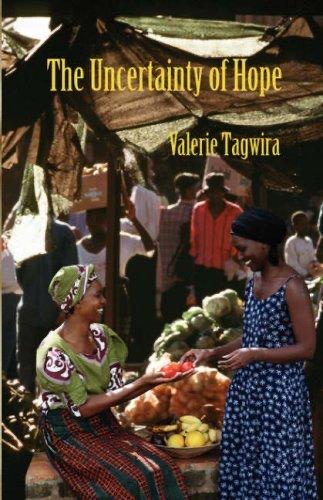
Cover of The Uncertainty of Hope

The Uncertainty of Hope

Valerie Tagwira

4 ideas

  1. Mbare Vendors Crushed by Operation Murambatsvina

    Onai, a Mbare market vendor, and her friend Katy, who trades on the parallel economy, survive hyperinflation and scarcity in early-2000s Harare through informal trading. In 2005 the government's Operation Murambatsvina ('Drive Out the Rubbish') bulldozes the stalls and backyard structures their livelihoods and homes depend on. The episode shows a state-declared clean-up removing the only survival mechanisms the formal economy had left the urban poor.

  2. Kin pressure converts domestic abuse into duty

    Onai stays with her violent, unfaithful husband Gari partly because her mother and wider kin frame endurance as a wife's obligation and leaving as shameful. Economic dependence and the children's welfare make that framing hard to refuse. The family network that should protect her enforces her remaining in danger by redefining suffering as respectability.

  3. Marital HIV risk from bargaining powerlessness

    Insisting on condoms or refusing sex reads as accusation or disobedience, and it invites violence or abandonment she cannot afford. Her fidelity therefore offers no protection, because the risk is set by his conduct and her lack of leverage.

  4. Informal survival reclassified as state 'rubbish'

    When the formal economy collapses, vending, currency dealing and backyard housing become the real economy of the poor. A state can relabel these practices as illegality, disorder or dirt and destroy them under the banner of cleanliness and law. Read this way, 'order' campaigns work less as fixes for crime than as transfers of the costs of state failure onto its most exposed citizens.

Save and mark ideas in the app