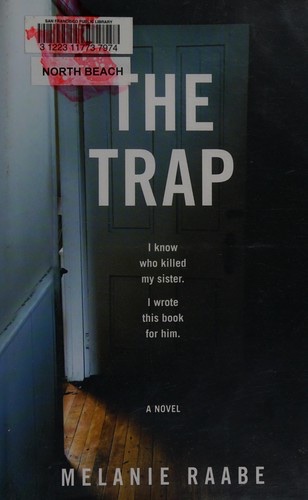
Cover of The Trap

The Trap

Melanie Raabe

4 ideas

  1. Recluse novelist baits sister's suspected killer

    Linda Conrads, a bestselling German novelist, has not left her house in over eleven years since finding her younger sister Anna stabbed to death and glimpsing a man fleeing the scene. When she recognizes that face on television as the journalist Victor Lenzen, she writes a thriller that reconstructs the murder in detail and grants her only interview to him. She then stages a face-to-face meeting in her home to provoke a confession.

  2. Fiction as a behavioral lie detector

    By embedding details that only the perpetrator would know into a public story, the author turns the text into a stimulus and the suspect's reaction into evidence. The setup relies on guilty knowledge leaking out through recognition, discomfort, or over-correction under questioning. It sidesteps the lack of forensic proof, but it only yields ambiguous behavioral signals that the interrogator must still interpret.

  3. Traumatic certainty is not reliable memory

    A single eyewitness recognition, formed in a moment of shock and rehearsed for years in isolation, can feel absolutely certain while being contaminated by grief, guilt, and reconstruction. As the confrontation unfolds, the accuser's own memory becomes the thing under interrogation. The strength of a conviction therefore says little about its accuracy, especially when no one else can check it.

  4. The trap-setter is also trapped

    Linda's house works as both fortress and prison: controlling every detail of her environment stands in for the control she lost over the past. Bringing the suspect into that sealed space means she has locked herself in with the danger. Any trap strong enough to catch someone exposes its builder to the same risk, whether through physical danger, self-deception, or obsession.

Save and mark ideas in the app