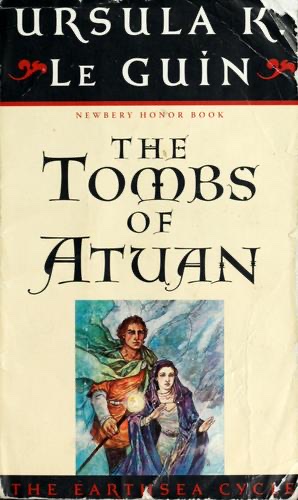
Cover of The Tombs of Atuan

The Tombs of Atuan

Ursula K. Le Guin

4 ideas

  1. Tenar leads Ged out of the Labyrinth

    Arha is taken from her family at five, declared the reborn priestess of the Nameless Ones, and stripped of her name. As a teenager she finds the wizard Ged trapped in the lightless Labyrinth beneath the Tombs, where he has come to steal half of the broken Ring of Erreth-Akbe, and she keeps him alive in secret. He gives back her true name, Tenar, she guides him out as the Tombs collapse behind them, and the two rejoined halves of the ring restore the lost Rune of Peace.

  2. Freedom is a burden, not a relief

    Leaving a confining role does not bring immediate joy. It brings the full weight of choosing, and with it the loss of the certainty the old role supplied. Tenar grieves and panics after her escape, and even thinks of killing Ged, because freedom asks her to carry responsibility the institution used to carry for her.

  3. Identity erasure through ritual renaming

    The priesthood controls Tenar by replacing her name with a title, Arha, meaning 'the Eaten One,' and by telling her she is the same soul reborn forever. When Ged restores her true name, she gets back a self able to choose.

  4. Power that is only darkness and denial

    The Nameless Ones are real, but they are powers of emptiness. They can destroy and keep people in darkness, and they can create nothing. Seen this way, an institution devoted to them is sustained less by what it offers than by the fear it produces and the lives it swallows, and it keeps its authority by keeping its servants in the dark.

Save and mark ideas in the app