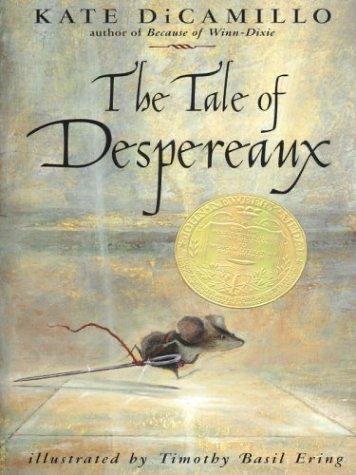
Cover of The Tale of Despereaux

The Tale of Despereaux

Kate DiCamillo

4 ideas

  1. A mouse banished, then returns to rescue

    Despereaux Tilling is an undersized mouse with huge ears who reads books instead of nibbling them and speaks to the human Princess Pea. The mouse council sentences him to the rat-filled dungeon for this, and his own father beats the drum that sends him down. He survives, then goes back into the dungeon with a needle and a spool of thread to rescue the princess from the rat Roscuro and the servant girl Miggery Sow.

  2. Villainy grows from a thwarted longing

    The antagonists are not evil by nature. Each wanted something good and was denied it. Roscuro is a rat who loved light, was recoiled from in horror, and turned his desire into revenge. Miggery Sow was sold by her father for a tablecloth, a hen and cigarettes, beaten until she was half-deaf, and wants to be a princess. When a longing is met with rejection, it bends into a plan to take by force what was refused.

  3. Forgiveness as a choice made despite darkness

    Princess Pea still feels hatred toward Roscuro, the rat whose fall into the soup caused her mother's death. She chooses to spare him and offers him soup anyway, and Despereaux likewise forgives the father who condemned him. Forgiveness here is an act of will performed while resentment is still present, not a feeling that arrives on its own. It breaks the cycle of revenge that grief would otherwise keep going.

  4. Grief turned into sweeping prohibition

    After the queen dies of shock when a rat falls into her soup, the grieving king outlaws both soup and rats across the whole kingdom. Reading a sweeping rule as displaced grief shows how private loss becomes collective punishment of everything linked to the injury.

Save and mark ideas in the app