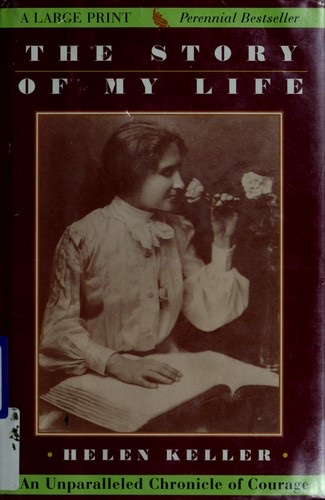
Cover of The Story of My Life

The Story of My Life

Helen Keller

3 ideas

  1. Language arrives through immersion, not drilled lessons

    Sullivan spelled whole sentences into Keller's hand all day long, the way hearing children are bathed in speech long before they understand it, rather than teaching isolated words in formal sessions. Keller argues that meaning comes from constant, context-bound exposure during real activity such as walks, meals, and handling objects, so the child infers usage from situations instead of memorizing definitions.

  2. Touch and smell as full perception

    Keller describes a world built without sight or sound: she recognizes people by the vibration of footsteps and the feel of their hands, reads weather and place by smell, and knows emotion through facial muscles under her fingers. Seen this way, the missing senses are not the core of her experience. Perception is reconstructed through the remaining channels into a rich, structured world, not experienced as a void.

  3. The Frost King plagiarism accusation

    At about age eleven, Keller wrote a story called "The Frost King" as a birthday gift for Michael Anagnos of the Perkins Institution, and it was published. It turned out to closely reproduce Margaret Canby's "The Frost Fairies," which had been spelled to her years earlier and which she had no conscious memory of hearing. A Perkins tribunal questioned her, and the episode left her afraid for years that her own thoughts were not her own. It is a vivid case of cryptomnesia, where absorbed material resurfaces as apparently original work.

Save and mark ideas in the app