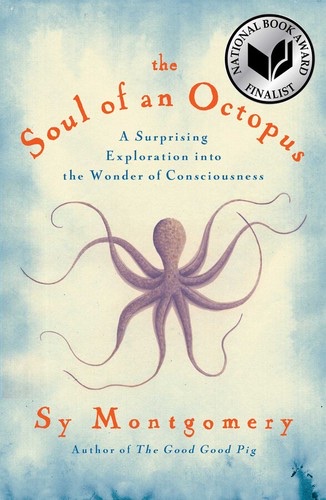
Cover of The Soul of an Octopus

The Soul of an Octopus

Sy Montgomery

4 ideas

  1. Octavia guards eggs that cannot hatch

    She guarded and cleaned them for months as a mother in the wild would, and her body declined into senescence around this last task. The episode shows a captive animal carrying out an evolved end-of-life program even where it is biologically futile.

  2. Distributed intelligence across semi-autonomous arms

    Roughly two-thirds of an octopus's neurons sit in its arms, not its central brain. Each arm can taste through chemoreceptors in its suckers and can explore and grasp with considerable local control. The animal's cognition is spread through its body instead of being concentrated in a single command center.

  3. Octopuses recognize and judge individual humans

    Aquarium octopuses tell individual people apart and respond to each one differently. They reach out to trusted keepers and may squirt water at a person they dislike, even when that person wears the same uniform as everyone else. This individual recognition and preference is evidence of personality and social memory in an invertebrate.

  4. Mind evolved separately in an alien lineage

    Octopuses are molluscs whose lineage split from ours more than 500 million years ago, yet they show curiosity, play, problem-solving and emotion. This means complex minds arose more than once, by separate evolutionary routes. Looking at consciousness this way removes the vertebrate brain as its template and asks us to find mind in bodies built on entirely different plans.

Save and mark ideas in the app