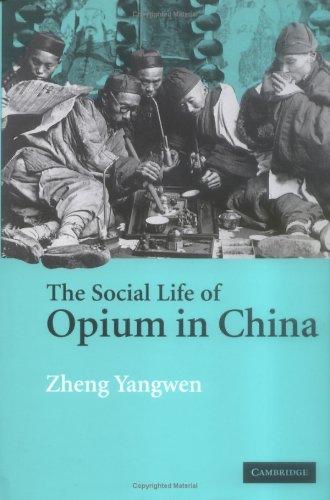
Cover of The Social Life of Opium in China

The Social Life of Opium in China

Zheng Yangwen

5 ideas

  1. Demand created the opium trade, not supply

    Opium's spread in China was driven primarily by Chinese consumers' desires and social practices rather than being simply imposed by British traders. Before the drug became a mass commodity, domestic taste, fashion, and elite consumption had already created the market that foreign supply later fed.

  2. Trickle-down diffusion of elite luxury habits

    Opium moved down the social hierarchy. It began as a rare aphrodisiac and connoisseur's pleasure among the late Ming and Qing court and literati, and was then imitated by merchants, officials' households, and eventually laborers. Each group adopted it partly to claim the status its consumption signaled, so emulation rather than addiction alone carried it downward.

  3. Tobacco pipe enabled opium smoking

    Smoking opium, rather than eating or drinking it, took hold in China after tobacco smoking arrived from the Americas via Southeast Asia and people began mixing opium into tobacco. The pipe technology and smoking habit already in place reshaped how the drug was taken, and smoking made it faster-acting, more social, and more ritualized.

  4. Paraphernalia as a culture of connoisseurship

    The book reads opium through its material culture: ornate pipes, lamps, couches, and specialized smoking houses. This reveals consumption as a refined leisure art with aesthetic standards and rules of etiquette. Seeing the objects shows that users were cultivating taste and sociability, not merely feeding a craving.

  5. Medicine and pleasure blurred into habit

    Opium entered Chinese life legitimately as a medicine for diarrhea, pain, and fatigue. That therapeutic use gave recreational use cover and normalized daily ingestion. The line between treatment, stimulant for labor, and indulgence dissolved, so habit formed through respectable channels.

Save and mark ideas in the app