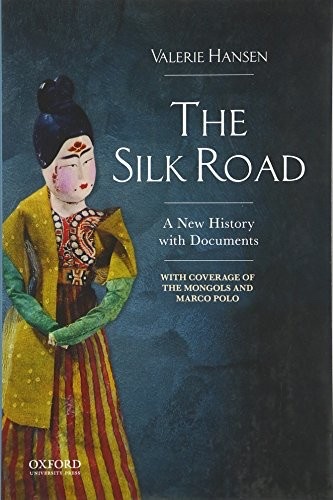
Cover of The Silk Road: A New History

The Silk Road: A New History

Valerie Hansen

6 ideas

  1. Silk Road Trade Was Small and Local

    Excavated contracts, passes, and letters from the oasis sites record mostly short-distance exchanges between neighboring towns, often by peddlers, with few large caravans and few professional long-distance merchants. The famous transcontinental route was a chain of overlapping local circuits, so goods moved across Eurasia in relay rather than by one merchant's journey.

  2. State Military Spending Drove the Oasis Economy

    Under the Tang, the largest flows of silk into the western regions were government payments to garrison soldiers, often in bolts of cloth, and not private commerce. When the An Lushan rebellion (755) forced the troops to withdraw, the funding stopped and the local economies contracted sharply, which shows the traffic was sustained by imperial expenditure rather than by market demand alone.

  3. Silk as Currency, Not Just Commodity

    Standardized bolts of plain silk served as a unit of account and a medium of exchange alongside coins and grain, used for paying soldiers, buying goods, and settling debts. Much of the silk on the road therefore functioned as money circulating through the government and local markets, not as luxury cargo destined for Rome.

  4. Read Trash as the Real Archive

    The most revealing Silk Road sources are discarded documents: wooden tablets in rubbish heaps at Niya, and used paper recycled into shoes, belts, and burial clothing in Turfan graves. Because these texts were never meant to be preserved, they capture everyday transactions, disputes, and prices that official histories and grand narratives leave out.

  5. Migrants Carried Ideas More Than Goods

    The road's lasting significance lies in the transmission of religions, languages, artistic motifs, and technologies such as papermaking. These ideas moved chiefly with refugees, migrants, and envoys who settled in new places rather than with traders. Cultural transfer happened through communities relocating and intermarrying, not through the volume of commercial traffic.

  6. The Stranded Wife of the Ancient Letters

    Among the early-4th-century Sogdian Ancient Letters, found in an undelivered mailbag near Dunhuang, is one from a woman named Miwnay. Her husband had abandoned her and their daughter in Dunhuang, and she writes that she would rather have married a dog or a pig. The mailbag shows a Sogdian network that was small, family-based, and fragile: its members were exposed to debt, desertion, and war rather than operating as a powerful trading empire.

Save and mark ideas in the app