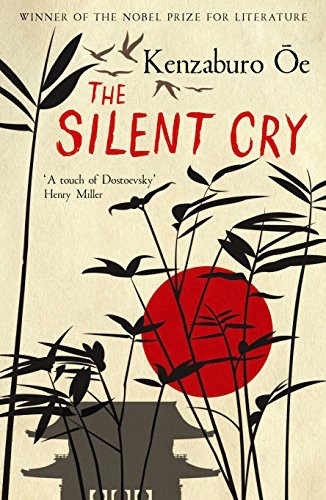
Cover of The Silent Cry

The Silent Cry

Kenzaburō Ōe

4 ideas

  1. The supermarket riot and the hidden cellar

    In 1960s Shikoku, Takashi Nedokoro trains the valley's youths as a football team and leads them in looting a supermarket owned by a Korean businessman, the 'Emperor of the Supermarket.' He models the riot on the 1860 uprising led by his great-grandfather's brother, whom family legend held had fled and abandoned his comrades.

  2. Re-enacting ancestral myth manufactures present identity

    A person who restages an ancestor's violent act is not recovering history but borrowing its authority to justify what he already wants to be. The version of the ancestor he imitates is shaped by his own needs, so when the historical record is revised, his whole self-justification collapses with it.

  3. Telling the truth as self-annihilation

    Takashi holds that there is a 'true thing' a person can say which is so unbearable that whoever speaks it must then be killed or kill himself. For him confession is not relief but the final act that makes survival impossible. He enacts this by confessing his incest with his disabled sister, whose suicide followed, then shooting himself.

  4. Economic grievance redirected onto an ethnic outsider

    A declining community's anger at economic dependence can be steered by a charismatic organizer onto a visible minority figure who embodies the new economy. In the valley, the Korean supermarket owner, a former forced laborer, stands in for the market forces hollowing out local life. That turns diffuse resentment into a looting riot with a concrete target and an inherited grudge.

Save and mark ideas in the app