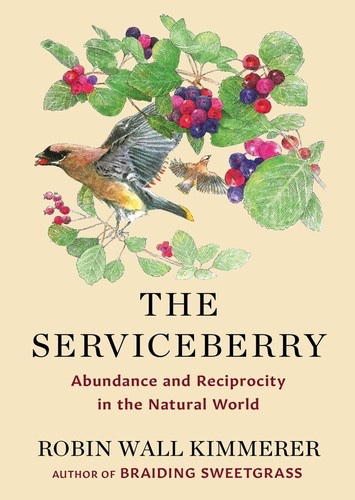
Cover of The Serviceberry: Abundance and Reciprocity in the Natural World

The Serviceberry: Abundance and Reciprocity in the Natural World

6 ideas

Buy on Amazon
  1. Abundance as a gift to circulate

    When the serviceberry fruits, it produces far more than it needs and distributes the surplus to birds, who in turn disperse its seeds. The book frames natural abundance not as private surplus to hoard but as a flow whose value increases through being given away and shared.

  2. Gift versus commodity relationship

    A commodity, once purchased, severs the tie between buyer and seller, while a gift creates an ongoing relationship and obligation to reciprocate. The same object (a berry, a meal) carries entirely different social meaning depending on whether it moves through exchange or through gifting.

  3. Gift economies bind through gratitude

    In a gift economy, receiving something generates gratitude, and gratitude generates an impulse to give in return, keeping goods in perpetual circulation rather than accumulation. Status accrues to those who give the most away, not to those who hold the most.

  4. Reciprocity as ecological survival strategy

    The book reads mutual exchange between species (plants feeding animals, animals spreading seeds) as the actual mechanism by which ecosystems persist, not as sentimental metaphor. Through this lens, reciprocity is not a moral preference but a condition of continued existence for interdependent beings.

  5. Scarcity is manufactured, not natural

    The book argues that market systems create the perception of scarcity to drive consumption and price, whereas natural systems often operate on genuine abundance and sharing. The feeling of "not enough" is treated as a product of a particular economic arrangement rather than a fact of the material world.

  6. Wealth measured by what you give

    Kimmerer draws on Indigenous practice where honor and wealth are defined by generosity and the capacity to provide for others, not by private accumulation. The unit reframes "having enough" as the point at which one can begin giving, rather than a threshold for keeping.

Save ideas and give them a thumbs up or down in the app