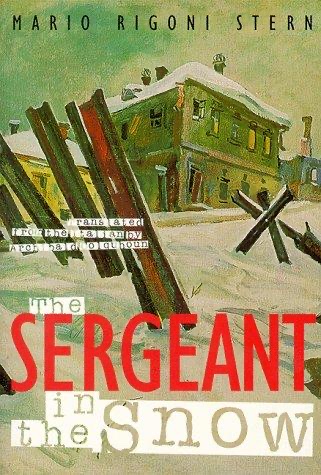
Cover of The Sergeant in the Snow

The Sergeant in the Snow

Mario Rigoni Stern

4 ideas

  1. The soup in the Russian isba

    During the January 1943 retreat, Sergeant Rigoni Stern, starving and armed, pushed into a peasant hut in a village and found Russian soldiers eating inside. The woman of the house served him a bowl of milk and millet, and the soldiers watched him eat without reaching for their weapons. He thanked them and walked out alive, a moment of shared humanity inside the war with no truce behind it.

  2. Small-unit duty sustains men when command collapses

    As the Italian front on the Don dissolved and divisional order broke down into a stream of stragglers, what held Rigoni Stern's squad together was concrete responsibility: getting his men out, keeping the heavy weapons, checking that no one was left behind. Survival in a disintegrating army depends less on orders from above than on each small leader treating the few men beside him as his personal charge.

  3. "Will we make it home?" as survival horizon

    The refrain "Sergentmagiù, ghe rivarem a baita?" asks, in dialect, "Sergeant major, will we get back to the mountain hut?" It shows that men on the steppe endured on a concrete image of home, not on strategic aims or ideology. A vivid, specific destination turns an unbearable present into a road that can still be walked.

  4. Witness by plain understatement, not judgment

    The account records cold, hunger, deaths and the Nikolayevka breakout in flat, exact detail, and it withholds rhetoric, heroics, blame and hatred of the enemy. Removing the narrator's commentary makes the reader carry the moral weight, and it makes the testimony more credible and more devastating than an argued indictment of the war would be.

Save and mark ideas in the app