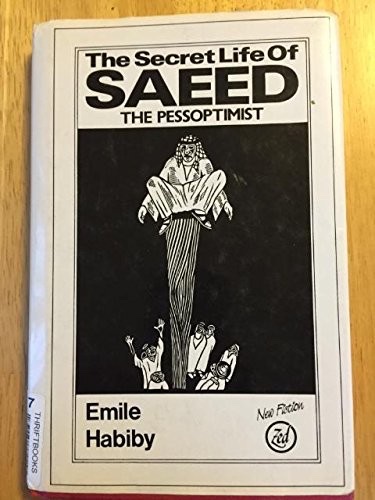
Cover of The Secret Life of Saeed the Pessoptimist

The Secret Life of Saeed the Pessoptimist

Emile Habibi

4 ideas

  1. Pessoptimism as a colonized survival reflex

    Saeed's family trait fuses pessimism and optimism into one reflex: every disaster is met with gratitude that it was not worse. The 'thank God it was only this' habit makes endless humiliation bearable, but it also blocks resistance, because each loss becomes a reason for relief rather than refusal.

  2. Saeed, the informer who stays in 1948

    Saeed's life is spared in 1948 when a soldier's bullet kills his donkey instead of him. Because his late father had done services for the Zionist official Adon Safsarsheck, Saeed becomes a petty informer for the Israeli state while living as an Arab citizen inside Israel. His loves mark what was lost: Yuaad, his first love, is deported, and his wife Baqiyya ('the one who remained') and their son Walaa, who turns fedayee, walk into the sea and vanish. Ruined and stranded, he is finally carried off by a being from outer space, from where he writes his letters.

  3. Collaboration buys suspicion, not safety

    The informer's loyalty never earns him trust from the state he serves. The collaborator ends up distrusted by both sides and protected by neither.

  4. An impossible vantage point enables unsayable testimony

    The book lets a man with no legitimate place to stand speak from outer space, outside both the Israeli state and the Arab nation. Absurd fantasy and a clownish narrator give the telling deniability, so facts too painful or dangerous to state directly, such as erased villages, expulsions, and complicity, can be recorded as farce.

Save and mark ideas in the app