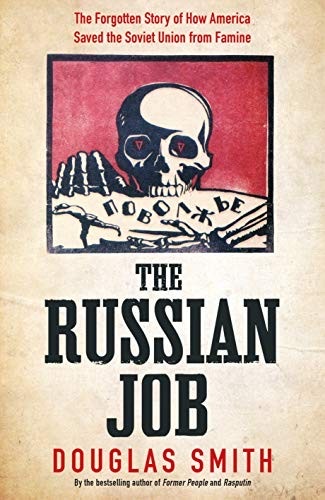
Cover of The Russian Job

The Russian Job

Douglas Smith

4 ideas

  1. The American Relief Administration Feeds Russia

    In August 1921, after Maxim Gorky's international appeal, Herbert Hoover's American Relief Administration signed the Riga Agreement with the Bolsheviks and entered famine-stricken Soviet Russia. Some 300 Americans directed a Russian workforce of more than 100,000, and at the peak in summer 1922 they were feeding close to 11 million people a day across the Volga region and beyond. The mission ended in 1923, and the Soviet state then spent decades erasing or vilifying its role.

  2. Operational Autonomy as Precondition for Aid

    Hoover would send aid only on specific terms: release of imprisoned Americans, American control over whom to hire and whom to feed, and freedom of movement and immunity for relief staff. Securing distribution rights before shipping food kept aid from becoming a resource the host regime could steer toward loyalists. The same autonomy made the relief organization look to the regime like a rival power operating inside its territory.

  3. Foreign Aid Can Subsidize a Regime's Priorities

    The Bolsheviks accepted American food out of desperation, but they treated the relief as an ideological threat. By 1922–23, with famine still ongoing and the ARA still feeding the population, the Soviet government resumed grain exports. External relief effectively freed domestic resources that the regime then spent on its own political and economic goals rather than on its starving citizens.

  4. Gratitude as a Threat to Legitimacy

    A regime whose legitimacy rests on the claim that capitalism is hostile cannot allow its people to remember capitalists saving their lives. So the aid gets recast as espionage, sabotage, or self-interested propaganda. The local staff who worked with the foreigners are arrested or silenced, so that official memory contradicts what millions actually experienced.

Save and mark ideas in the app