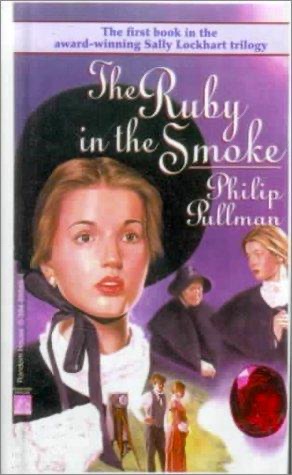
Cover of The Ruby in the Smoke

The Ruby in the Smoke

Philip Pullman

4 ideas

  1. Sally Lockhart and the Ruby of Agrapur

    In 1872 London, sixteen-year-old Sally Lockhart's father drowns when his ship sinks in the South China Sea. She then receives an anonymous warning about 'the Seven Blessings', and the phrase kills an old clerk from shock. Her investigation, helped by the photographer Frederick Garland and the office boy Jim Taylor, uncovers a shipping firm secretly used to smuggle opium, a ruby taken during the Indian Mutiny that the murderous landlady Mrs Holland has pursued for years, and the truth that the man who raised Sally was not her biological father.

  2. Practical competence is a woman's real protection

    Sally survives because of skills her father taught her that Victorian girls were denied, such as bookkeeping, knowledge of stocks and shipping, military tactics and shooting a pistol. The novel argues that the conventional feminine education of accomplishments and ignorance left women dependent and exploitable. Knowing how money and power actually work is what turns a victim into an agent.

  3. Respectable commerce hiding narcotic trafficking

    The villainy is not confined to lurid criminals in Wapping slums. It runs through a respectable City shipping firm whose ledgers conceal opium traffic. Following the account books rather than the obvious villains shows that Britain's prosperity and propriety depended on trading in addiction abroad. Seen this way, the crime is structural, not merely a matter of individual wickedness.

  4. Breaking a curse through deliberate renunciation

    The ruby brings ruin to each person who covets or holds it, because its value makes everyone around its owner a potential predator. Sally ends the cycle by giving it up rather than winning it, and the ruby is lost to the Thames. When an object's value is the source of the danger, refusing to possess it is the only reliable escape.

Save and mark ideas in the app