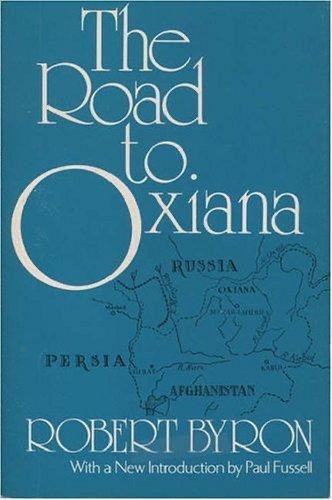
Cover of The Road to Oxiana

The Road to Oxiana

Robert Byron

4 ideas

  1. A photograph leads to Gumbad-i-Qabus

    After a long overland approach he found it, bare of ornament apart from bands of Kufic inscription, its height given entirely by the flanges of its plain brick shaft. He ranked it among the great buildings of the world. The episode shows a single image of a monument generating an entire expedition, and the monument surviving the test of first-hand sight.

  2. Timurid building rivals the European Renaissance

    Byron argues that fifteenth-century Timurid architecture deserves the same rank as Renaissance Europe, not a place in the exotic margins. The monuments he cites are Gawhar Shad's mosque at Mashhad and the Musalla complex at Herat, and he treats the Safavid Sheikh Lutfullah mosque as their later flowering.

  3. Marjoribanks: a code name for the dictator

    Throughout the book Byron refers to Reza Shah as 'Marjoribanks'. The pseudonym let him mock the ruler without the name drawing attention from Persian officials. The joke itself records the conditions: fear of saying the Shah's name aloud, compulsory Western hats, and state-driven modernisation. Under an autocracy, even naming the ruler becomes an act that has to be disguised.

  4. Travel friction as the real narrative

    Byron's diary gives as much space to the obstacles as to the monuments: permits refused, lorries breaking down, officials stonewalling, days spent waiting. He often renders these as short dialogues in the style of a play. Setting absurd delays beside moments of aesthetic rapture shows that access to beauty is paid for in bureaucratic and physical friction. That cost is part of what the monuments mean to the traveller.

Save and mark ideas in the app