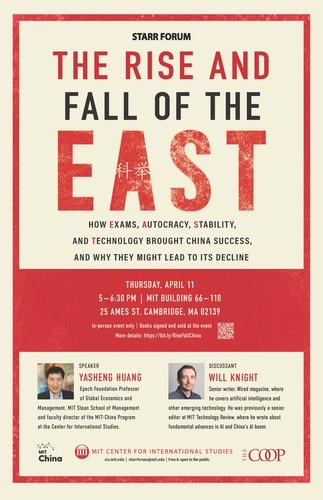
Cover of The Rise and Fall of the EAST

The Rise and Fall of the EAST

Yasheng Huang

6 ideas

  1. EAST: Exams, Autocracy, Stability, Technology

    Chinese governance is explained through four interlocking elements: a civil-service examination system, autocratic rule, a premium on political stability, and state direction of technology. The exam co-opts elites into the autocracy, which prizes stability. That stability-first state then steers technology toward its own ends, and together the four reinforce each other across dynasties.

  2. Scale versus scope in civilizations

    Scale is a polity's capacity for homogeneity, centralization and uniform coordination across vast territory and population. Scope is its tolerance for diversity, pluralism and competing centers of ideas and power. China optimized relentlessly for scale, which delivered unity and administrative reach at the cost of the variety and dissent that drive discovery.

  3. Exams monopolized ambition and neutralized elites

    The keju made state office the single legitimate path to status. Society's most talented and ambitious people spent decades memorizing a state-approved curriculum instead of building independent institutions, wealth, or rival ideologies.

  4. Hong Xiuquan: when failed candidates rebel

    Hong Xiuquan failed the imperial examination repeatedly. He then turned his frustrated ambition into the Taiping Rebellion, one of the deadliest civil wars in history. The case shows the co-optation machine's failure mode: when the exam stops absorbing surplus ambition, its educated rejects become the regime's most dangerous opponents.

  5. Homogenization answers the Needham question

    The book attributes this to institutions that valued stability over curiosity, not to any cultural deficit. A standardized orthodox curriculum and state control of technology removed the intellectual diversity and independent patrons that sustained innovation. Invention flourished during periods of fragmentation and scope and withered under consolidated scale.

  6. Reform era as temporary scope expansion

    Read through the scale-scope lens, Deng-era growth was a deliberate but reversible loosening. The state tolerated more private enterprise, foreign ideas and decentralization, and dynamism followed. Xi Jinping's recentralization looks less like a break than a reversion to the imperial default of prizing control and stability. Modern China's trajectory therefore depends on whether scope is treated as a tool the center grants or a right it cannot revoke.

Save and mark ideas in the app