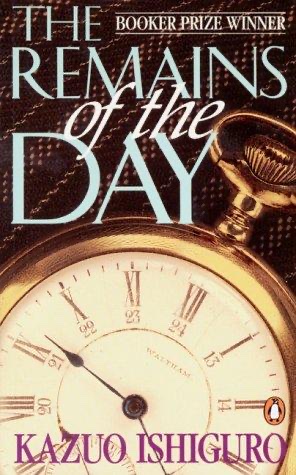
Cover of The Remains of the Day

The Remains of the Day

United Kingdom · 1923–1956

4 ideas

Buy on Amazon

In 1956, Stevens, an English butler, takes a drive that draws him back through decades of country-house service. He remembers Lord Darlington and Miss Kenton, a colleague who mattered deeply to him. As Stevens tells his story, duty and professional dignity begin to look like ways of avoiding harder truths.

  1. Stevens serves port while his father dies

    During a 1923 international conference at Darlington Hall, Stevens keeps attending guests while his father, the under-butler, has a fatal stroke upstairs; he later calls that night a triumph of professional dignity. In 1932 he carries out Lord Darlington's order to dismiss two Jewish maids without objection. In 1956 he meets Miss Kenton, now Mrs Benn, who says she once imagined a life with him. He admits only to the reader that 'at that moment, my heart was breaking,' then weeps on Weymouth pier over a life spent serving a discredited man.

  2. Dignity as never leaving the role

    Stevens defines a great butler's 'dignity' as never taking off the professional self in public, the way a gentleman keeps his suit on. What looks like a standard of excellence works as a way to seal off feeling, because grief, love, and doubt all count as unprofessional lapses. The role becomes the place where the self hides, so self-mastery and self-erasure are the same act.

  3. Memory edits itself to protect identity

    Read a first-person account for its hedges ('I believe,' 'it is possible'), its selective detail, and its sudden changes of subject, because those mark where memory is shielding the teller. Stevens misremembers who said what and reframes painful scenes as professional successes. He even tells strangers he never worked for Lord Darlington. The truth sits in what the narrator circles and refuses to name, not in what he states.

  4. Loyalty cannot outsource moral judgment

    Stevens holds that a servant's highest contribution is to serve a great man completely and leave moral questions to him. When Darlington turns out to be a Nazi sympathiser, Stevens finds his whole life's value went into another man's mistake: 'I can't even say I made my own mistakes.' Handing your judgment to someone you trust does not free you from responsibility; it takes away your standing to own the outcome.

Save ideas and give them a thumbs up or down in the app