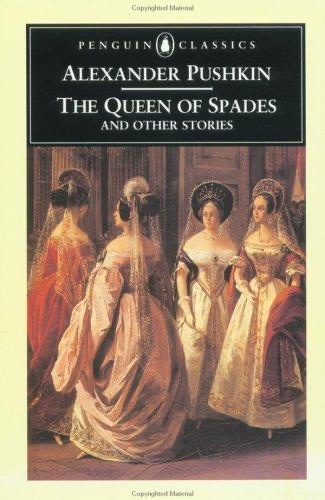
Cover of The Queen of Spades

The Queen of Spades

Alexander Pushkin

4 ideas

  1. Hermann's three cards: three, seven, ace

    Hermann is a German-descended engineer officer who watches others gamble but never plays, saying he cannot risk the necessary to gain the superfluous. He courts the ward Lizaveta to get into the house of the old Countess, who is said to know three unbeatable cards, then threatens the Countess with a pistol until she dies of fright. Her ghost gives him the sequence three, seven, ace; he stakes his whole capital against the banker Chekalinsky, wins on the three and the seven, but on the third night finds he has drawn the queen of spades instead of the ace, sees the queen wink at him like the Countess, and ends in an asylum muttering the cards.

  2. The prudent man's all-in bet

    Hermann's thrift and restraint do not protect him from risk. They store up desire until one apparently certain opportunity arrives, and then he stakes his entire inheritance on a single line.

  3. A system confirmed twice breeds fatal certainty

    Each win on the three and the seven proves the secret to Hermann and makes him more committed, so he raises the stakes precisely as he grows more exposed. The failure comes on the final, largest wager, when being wrong costs everything. Early success of a method validates the person's confidence, not the method's reliability on the next trial.

  4. Using people as instruments of the scheme

    Hermann treats Lizaveta's love and the Countess's life purely as access points to the secret, and his fixed idea turns every relationship into a tool. The ruin that follows comes through the very person he instrumentalized, the Countess returning as the card. Obsession shows up first in how a person reduces others to means, before it shows up at the table.

Save and mark ideas in the app