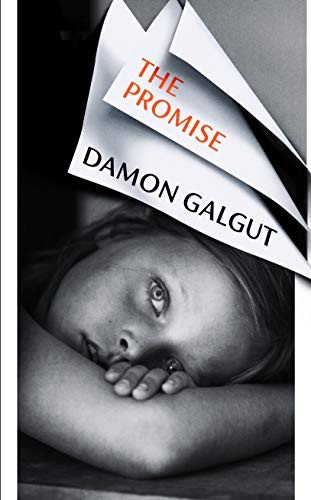
Cover of The Promise

The Promise

Damon Galgut

4 ideas

  1. The Swart family's unkept deathbed promise

    In 1986 Rachel Swart, dying on the family farm outside Pretoria, makes her husband Manie promise to give Salome, their Black domestic worker, the small house she lives in; their teenage daughter Amor overhears it, and Manie later denies it was ever made. The promise then goes unfulfilled through four family funerals: Rachel's in 1986, Manie's in 1995, Astrid's in 2004 and Anton's in 2018. Only after Anton's death does Amor finally transfer the house, and by then Salome's son Lukas treats it as too little, too late.

  2. Legal technicality as cover for withheld restitution

    The family first justifies not handing over the house by pointing out that under apartheid law Salome could not own the property, then keeps deferring after the law changes. The book argues that a formal obstacle, once removed, is rarely what was actually blocking justice. The beneficiaries simply swap in new reasons, such as paperwork, family disputes or the timing not being right, because the real obstacle is their unwillingness to give something up.

  3. Family decline mapped onto national eras

    Each funeral falls under a different political era: the late apartheid years under P.W. Botha, the Mandela years, the Mbeki years and the Zuma years. The family's private decay therefore tracks the nation's arc from hope to disillusion. Reading a household's inheritances, grudges and deaths as a small-scale version of a country's transition shows how structural injustice survives regime change through ordinary domestic inertia.

  4. Withheld interiority as a mirror of neglect

    The roving narrator drops freely into the minds of almost every white character, and even into animals and ghosts, but mostly refuses to enter Salome's, and at times says so explicitly. This formal choice makes the reader feel her marginality rather than just be told about it. The person whose claim drives the whole story is the one the family, and the narrative, never fully sees.

Save and mark ideas in the app