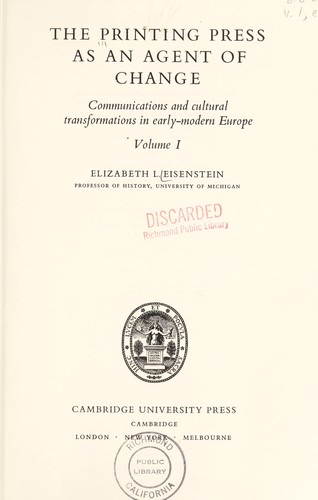
Cover of The Printing Press as an Agent of Change

The Printing Press as an Agent of Change

Elizabeth Eisenstein

6 ideas

  1. Typographical fixity preserves knowledge permanently

    Scribal copying degraded texts with each generation, so scholars spent their energy recovering and correcting what had been lost. Print made thousands of identical copies at once, which shielded texts from gradual corruption and physical loss. Scholarship could then move from salvaging the past to building on a stable base.

  2. Standardization lets distant readers share references

    Identical editions meant that readers in different cities could cite the same page, map, table or diagram and know they were looking at the same thing. This common reference point made coordinated criticism, correction and cumulative debate across Europe possible.

  3. Juxtaposing texts breeds new ideas

    Printing multiplied the number of books any one reader could hold, which put conflicting authorities side by side on the same desk. Once contradictions between ancient sources became visible, readers were pushed toward comparison, synthesis and doubt. New thinking came from this cross-referencing, not only from new discoveries.

  4. Feedback loops made error correction cumulative

    Printers invited readers to send in corrections, which were folded into later editions, so data such as star catalogs, maps and herbals improved with each edition. Mistakes could now be spotted and fixed across a wide network instead of being copied forward. This self-correcting cycle underpinned the Scientific Revolution.

  5. Luther's theses as the first media campaign

    Luther's Ninety-Five Theses were meant for academic debate, but printers reproduced them and they spread across Germany within weeks, beyond anyone's control. Reformers then used cheap pamphlets, vernacular Bibles and woodcut propaganda to reach lay readers directly, bypassing church gatekeepers. Protestantism became the first movement to use print deliberately for mass persuasion.

  6. Communication shifts as unrecognized historical cause

    The move from pen to press was an unannounced revolution, and historians overlooked it because they studied the ideas in texts rather than how those texts were made and circulated. Treating the medium as an active agent explains why the Renaissance, the Reformation and the new science happened when they did. The same ideas, handled scribally, would have stayed local and fragile.

Save and mark ideas in the app