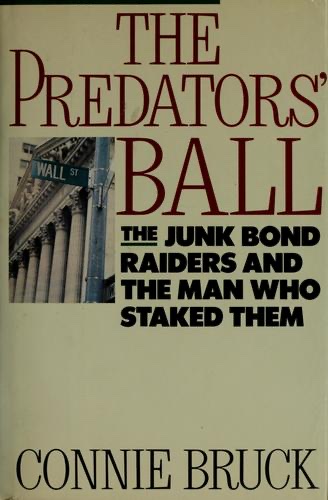
Cover of The Predators' Ball

The Predators' Ball

United States · 1980s

4 ideas

Buy on Amazon

An investigative account of Michael Milken's junk-bond network at Drexel Burnham Lambert and its annual conference, which financed raiders and the 1980s hostile takeover wave.

  1. Milken's Beverly Hills Junk-Bond Machine

    He built it into the dominant source of financing for companies shut out of investment-grade markets, then for corporate raiders such as Carl Icahn, T. Boone Pickens and Ronald Perelman. Drexel's annual Beverly Hills conference, nicknamed the Predators' Ball, brought issuers, raiders and bond buyers into one room, and Bruck presents it as the social engine that turned Milken's network into takeover capital.

  2. The Highly Confident Letter as Weapon

    Drexel let a raider launch a hostile bid backed only by a letter saying the firm was 'highly confident' it could raise the money, not by committed funds. The letter worked because Milken's record of placing huge bond issues within days made it credible. A reputation for guaranteed distribution became a substitute for cash in hand, which let small bidders threaten far larger targets.

  3. Captive Buyer Network Creates Closed Market

    Bruck argues that Milken's power came from controlling the buyer side of the market, not from underwriting skill alone. Savings and loans, insurers and funds that owed their growth to Drexel financing were expected to buy the next Drexel issue. Because issuers were often buyers of one another's bonds, demand and pricing were partly manufactured inside a reciprocal circle, and the network's loyalty mattered more than any single deal's merits.

  4. Mispriced Default Risk as Sales Thesis

    Milken drew on academic research, including W. Braddock Hickman's study of corporate bonds, showing that diversified portfolios of below-investment-grade bonds earned returns that more than offset their defaults. The lesson he drew was that credit-rating stigma, not actual loss rates, set their price. This reframing let him market new-issue high-yield debt as a rational bargain, though evidence drawn from 'fallen angels' did not necessarily hold for bonds that started out as junk and were built to fund leveraged takeovers.

Save ideas and give them a thumbs up or down in the app