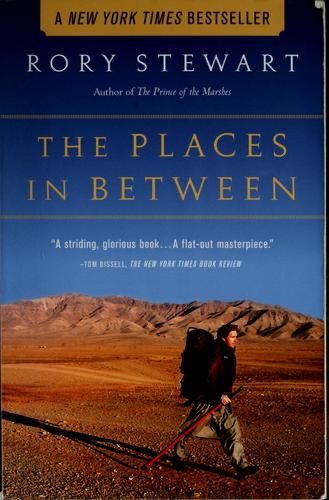
Cover of The Places in Between

The Places in Between

Rory Stewart

4 ideas

  1. Walking Herat to Kabul in winter 2002

    In January 2002, weeks after the Taliban fell, Rory Stewart walked alone across central Afghanistan from Herat to Kabul through deep snow, sleeping each night in whatever village house would take him. He carried letters of introduction from regional commanders, was assigned armed escorts by the Herat government, and adopted a half-starved fighting mastiff he named Babur. The route through the Hazarajat and past the Minaret of Jam put him in communities that foreign officials in Kabul almost never saw.

  2. Hospitality as a map of power

    Who will give a stranger a bed, and on whose word, shows who actually holds authority in a place. Stewart's safety depended on letters from specific commanders and on hosts passing him along to kin and allies. Each night's welcome or refusal showed the real chain of local patronage and fear, which formal titles and national structures did not reveal.

  3. Afghanistan is a patchwork, not a nation

    Rural Afghanistan is not one society waiting for a central state. It is a series of valleys whose loyalties are set by ethnicity, sect, local commanders, and remembered grievances, and these can flip within a day's walk. Policies that treat the country as a single unit with shared aims misread how allegiance actually works on the ground.

  4. Outside planners cannot see village reality

    International officials and state-builders in Kabul made plans from abstract categories such as democracy, civil society, and gender, and rarely left the capital. They therefore missed the local detail that governs rural life, including feuds, commanders' reach, subsistence economies, and looting of heritage sites like Jam. Slow, physical presence in a place yields knowledge that a remote expert cannot get, and intervention without it is likely to fail.

Save and mark ideas in the app