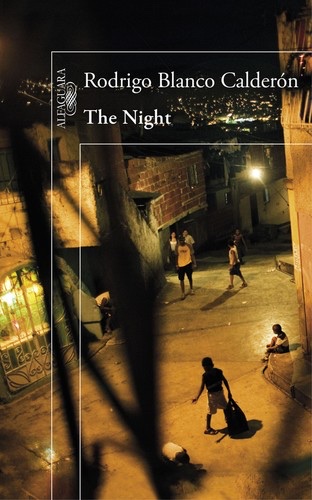
Cover of The Night

The Night

Rodrigo Blanco Calderón

4 ideas

  1. Caracas 2010 blackouts and a killer

    The novel follows a psychiatrist, Miguel Ardiles, and his writer friend Matías Rye as women are murdered under cover of the scheduled darkness, while the real poet Darío Lancini's palindromes run through their lives. It serves as a concrete case of a failing state's infrastructure collapse seeping into private life, crime and language at once.

  2. The palindrome as a model of political time

    A palindrome reads the same forward and backward, so movement through it produces no change of meaning. Read as a figure for a political regime, it describes a revolution that keeps announcing progress while circling back to where it began. Seeing history as palindromic shifts the question from 'where is this going?' to 'what keeps this from ever leaving itself?'

  3. Engineered darkness redistributes who is vulnerable

    A blackout is not a neutral inconvenience. It removes lighting, surveillance and the possibility of calling for help, so the danger falls hardest on those already exposed, here women moving through the city. When the state schedules darkness, it effectively schedules windows of impunity, and violence reorganizes itself around the timetable.

  4. Clinical symptoms as readings of national pathology

    The novel places a psychiatrist at its center, so patients' fears of the dark, insomnia and obsessions become legible as private versions of a collective condition. In this view, the consulting room works as an instrument for measuring a society's decline. Individual breakdowns register political damage before public discourse admits it.

Save and mark ideas in the app