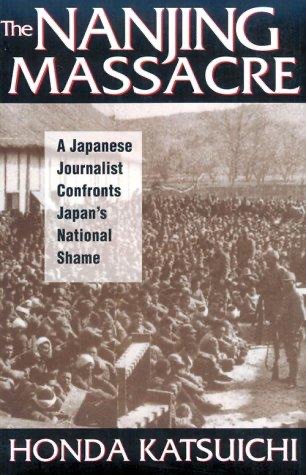
Cover of The Nanjing Massacre

The Nanjing Massacre

Honda Katsuichi

4 ideas

  1. Mufushan prisoners killed at Yangtze riverbank

    In mid-December 1937, units of the Japanese 13th Division's 65th Infantry Regiment captured more than ten thousand surrendering Chinese soldiers and civilians near Mufushan, north of Nanjing, and shot and bayoneted them in batches on the Yangtze banks over several nights. The unit's postwar story held that the prisoners were being released and were shot only when they rioted.

  2. Atrocity began on the march, not the city

    The killing at Nanjing was the endpoint of a campaign, not an isolated outburst after the city fell. By retracing the route from Shanghai through Suzhou and Changzhou and interviewing villagers along it, Honda shows that the army outran its supply lines and was ordered to live off the land. Requisition became plunder, and prisoners were treated as mouths the army could not feed. Rape, arson, and executions were therefore already routine in the countryside weeks before the capital was taken.

  3. Perpetrators' private diaries as unimpeachable evidence

    Contemporaneous diaries and letters written by ordinary soldiers are the hardest evidence for deniers to dismiss. Their authors had no motive to invent crimes and often recorded killings casually, as ordinary events. When these match the independent testimony of victims about the same places and dates, the two sources confirm each other in a way neither can alone. The dismissal 'the victims are exaggerating for propaganda' then collapses.

  4. Celebrated in wartime, reclassified as fabrication later

    In 1937 the Tokyo Nichi Nichi Shimbun openly celebrated two officers, Mukai Toshiaki and Noda Tsuyoshi, for a contest to be first to kill a hundred Chinese with the sword. Postwar nationalists recast the same reports as invented propaganda. Denial therefore works not by hiding atrocity but by retroactively changing the status of the record.

Save and mark ideas in the app