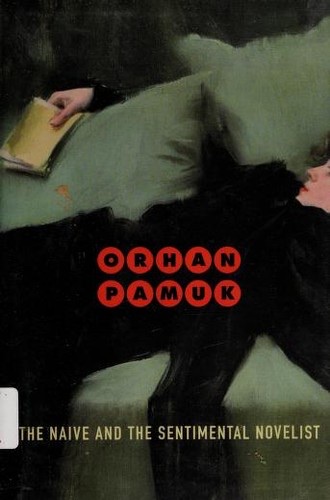
Cover of The Naive and the Sentimental Novelist

The Naive and the Sentimental Novelist

Orhan Pamuk

6 ideas

  1. Naive versus reflective reader and writer

    Adapting Schiller, Pamuk splits novelists into naive ones, who write spontaneously and take the fictional world as simply real, and sentimental (reflective) ones, who stay conscious of technique, artifice, and how the text is built. Good novel-reading and novel-writing both require moving between the two, being absorbed in the illusion while also watching how it is made.

  2. The hidden center of a novel

    Every novel has a secret center, a deep insight or question about life that the reader senses and hunts for while reading. Details, scenes, and characters are read as clues toward it, and this search is what separates a novel from a merely entertaining sequence of events.

  3. Novels run on visual imagination

    Pamuk argues that a novel's words work mainly by making readers see, turning text into mental pictures of landscapes, rooms, objects, and gestures. The writer's core task is to think in images and supply the details that let the reader build a vivid visual world.

  4. Fiction is simultaneously invented and autobiographical

    Readers habitually ask whether a novel's events 'really happened' to the author, and novels deliberately exploit this ambiguity. Pamuk holds that the pleasure of the novel depends on its being felt as both pure invention and veiled confession at once, and it would lose force if it were settled as either.

  5. Novelist as identifier with others

    Pamuk frames novel-writing as the effort to see the world through someone else's eyes, putting oneself in another person's place, however different, to understand how they perceive and judge. This makes the novel an instrument of empathy, and its limits show where the author's imaginative identification fails.

  6. Museums and objects as novelistic anchors

    Pamuk treats concrete objects, and the collections that hold them, as carriers of time, memory, and emotion that give fictional worlds weight and specificity. His own Museum of Innocence project turns this idea into practice: things ground a character's inner life more durably than abstract statements.

Save and mark ideas in the app