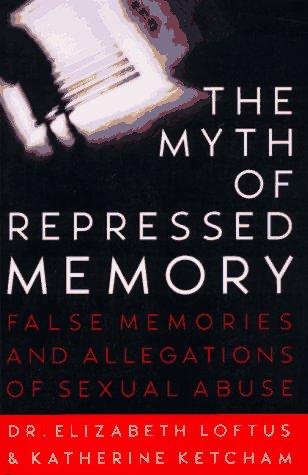
Cover of The Myth of Repressed Memory

The Myth of Repressed Memory

Elizabeth Loftus

6 ideas

  1. The misinformation effect reshapes eyewitness memory

    Information supplied after an event, such as a leading question or a detail slipped into a question, gets absorbed into the original memory and alters what a witness later reports seeing. Asking whether cars 'smashed' rather than 'hit' each other raises speed estimates and makes people more likely to recall broken glass that was never there. Memory is reconstructed from stored traces plus later input, not replayed like a recording.

  2. Lost in the Shopping Mall experiment

    Researchers had relatives present participants with three true childhood events and one invented one: being lost in a mall as a child and rescued by an elderly stranger. About a quarter of participants came to 'remember' the fabricated event, often adding their own sensory and emotional details. The study showed that an entire autobiographical episode, not just a detail, can be implanted through trusted suggestion.

  3. Robust repression lacks scientific support

    The idea that the mind can automatically bury years of repeated traumatic abuse and later retrieve it accurately is not supported by controlled evidence. Real trauma is more often remembered too well, as in intrusive recollections, than forgotten entirely. Ordinary forgetting and failing to think about something do exist, but they are different from a special repression mechanism that preserves pristine memories.

  4. Suggestive therapy as memory-manufacturing process

    False abuse memories are produced by a recognizable sequence of techniques. The therapist first presumes hidden abuse from vague symptom checklists, then uses guided imagery, hypnosis, dream interpretation, and survivor-group pressure to encourage the client to 'remember.' Each step supplies plausibility and content, and repeated imagining makes invented scenes feel familiar and therefore real.

  5. Confidence and vividness don't certify truth

    How detailed, emotional, or certain a memory feels says little about whether it happened, because implanted memories can be just as vivid and sincerely held as real ones. A sincere witness can therefore be completely wrong. To judge a memory, look for external corroboration and trace how the memory emerged, not how strongly the person believes it.

  6. George Franklin convicted on daughter's recovered memory

    Eileen Franklin-Lipsker said she had recovered a memory of watching her father murder her childhood friend twenty years earlier, and the recovered memory alone led to his murder conviction in 1990. The details she reported matched information that had been published in newspapers, and her account shifted over time.

Save and mark ideas in the app