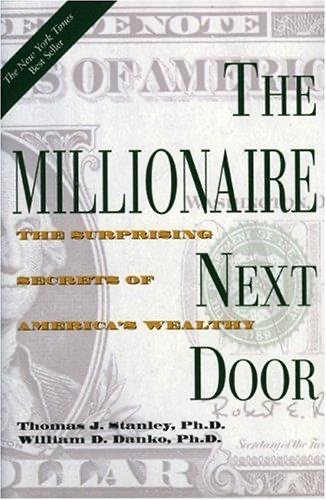
Cover of The Millionaire Next Door

The Millionaire Next Door

Thomas J. Stanley and William D. Danko

4 ideas

  1. Expected net worth wealth formula

    Expected net worth equals age multiplied by pretax annual household income, divided by ten, minus any inherited wealth. Households at twice that figure are 'prodigious accumulators of wealth' (PAWs) and those at half or less are 'under accumulators' (UAWs). This separates being wealthy from earning a high income.

  2. Income and wealth are different things

    High-income households often have little net worth because spending rises with income to signal status, while modest earners who spend well below their income build substantial wealth. Wealth is what you accumulate, not what you earn or display, so a conspicuous lifestyle is often evidence against wealth.

  3. Economic outpatient care weakens adult children

    Parents who give their adult children ongoing cash gifts and subsidies tend to produce children who consume more, save less and accumulate less wealth than their unsubsidized siblings. The gift raises the recipient's consumption baseline and weakens the self-reliance that drives accumulation.

  4. Offense versus defense in wealth building

    Earning is offense and budgeting, planning and spending restraint are defense. The authors argue most millionaires win on defense: they track expenses, set savings targets and treat time spent on financial planning as essential, while under-accumulators rely on earning more and neglect restraint.

Save and mark ideas in the app