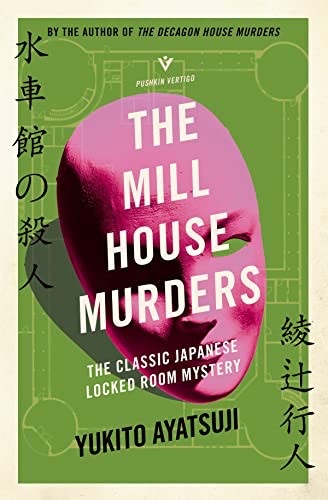
Cover of The Mill House Murders

The Mill House Murders

Ayatsuji Yukito

4 ideas

  1. The masked heir who was replaced

    In the 1985 timeline, the reclusive heir Fujinuma Kiichi hides his accident-scarred face behind a white mask and lives in a wheelchair in his mountain mill house with his young wife Yurie. On the night of a storm, one guest seems to be murdered and burned in the incinerator, a treasured painting by Kiichi's father vanishes, and another guest disappears and is assumed to be the thief.

  2. The mask as an interchangeable identity

    When a person is known to others only through a mask, a wheelchair, and a routine of seclusion, those props become the identity, and whoever occupies them inherits it. Few outsiders ever check the face or body beneath, so a recluse is the easiest person to impersonate. The detective's working rule follows from this: when someone is recognized only by concealing trappings, ask who gains by being the one inside them.

  3. The faceless corpse inverts victim and killer

    A body made unidentifiable by burning or mutilation lets investigators assign it the identity the scene suggests. That assumption fixed the wrong person as the victim and put the real killer beyond suspicion. The first question in such a case should be whose body it is, before asking who killed it.

  4. Alternating past and present as fair-play misdirection

    The novel alternates chapters from the murder night with chapters from the detective's inquiry a year later. The reader therefore holds the raw events and their later interpretation side by side. The solution arrives as a rereading of events the reader has already seen, not as new information.

Save and mark ideas in the app