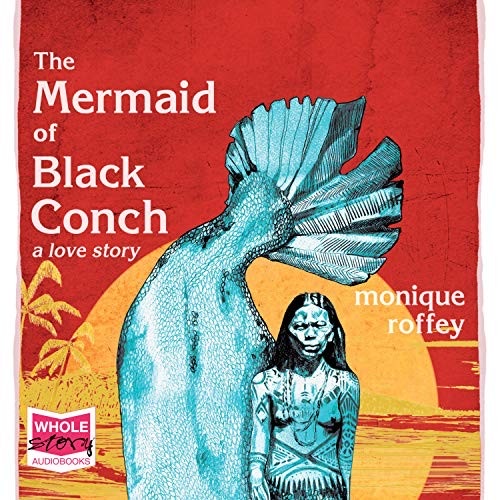
Cover of The Mermaid of Black Conch

The Mermaid of Black Conch

Monique Roffey

4 ideas

  1. Mermaid hooked by tourists, hidden by fisherman

    In 1976, on the small Caribbean island of Black Conch, a visiting American father and son on a sport-fishing trip hook Aycayia, a Taíno woman cursed centuries earlier to live as a mermaid, and haul her ashore to hang on the jetty as a trophy. That night the local fisherman David Baptiste cuts her down, hides her in his bathtub, and shelters her as she painfully sheds her tail and becomes human again. The recovery ends when the old curse returns and she goes back to the sea.

  2. Women's jealousy enforces the curse on beauty

    Aycayia is not cursed by a god or a man. The jealous wives of her community banish her because their husbands desire her, so her punishment is enforced by other women who police the woman who draws male attention. The novel shows the same mechanism recurring centuries later, when a local woman's resentment helps drive Aycayia back into exile. Misogyny persists because the people harmed by it also carry it out.

  3. The catch as colonial trophy-taking

    Read the tourists' catch as a repetition of conquest. Foreign visitors arrive for leisure, capture an Indigenous being, and display her as a prize to be photographed, weighed and possibly sold. Her rescue is carried out by locals, not by any outside authority. The lens reframes sport and tourism in postcolonial places as continuations of extraction, in which what is native becomes a trophy for the outsider.

  4. Reverse metamorphosis as painful re-embodiment

    She loses scales, sheds her tail, relearns walking, and recovers language and appetite, and this is how the novel renders what it costs to come back after long exile. Becoming human again means re-entering a body, a community and dependence on others. That dependence leaves her newly vulnerable to the same forces that exiled her.

Save and mark ideas in the app