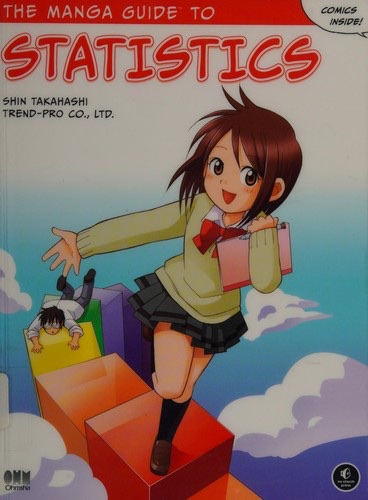
Cover of The Manga Guide to...

The Manga Guide to...

Anonymous

3 ideas

  1. Narrative wrapper around rigorous technical content

    Each volume puts a complete university-level syllabus inside a story, usually a novice character who needs the subject to solve a concrete personal or work problem, taught by a mentor figure. The plot supplies motivation and sequencing while the mathematics stays intact, so the story carries the reader through material they would otherwise abandon without watering it down.

  2. Expert verification as the credibility anchor

    A university academic supervises each book and checks the mathematics, so an entertainment format can serve as a trustworthy textbook substitute. Separating narrative authorship from content verification lets the storytellers simplify how the ideas are presented without introducing errors into the ideas themselves.

  3. Abstract formulas grounded in visual situations

    Concepts such as derivatives, probability distributions, electrical current or relational joins are first shown as a concrete illustrated situation, like a shop's changing sales, a crowd's measured heights or water flowing through pipes. Only then are they formalized in notation. Seeing the phenomenon before the symbol lets learners build a mental model to attach the formula to, instead of memorizing symbols without meaning.

Save and mark ideas in the app