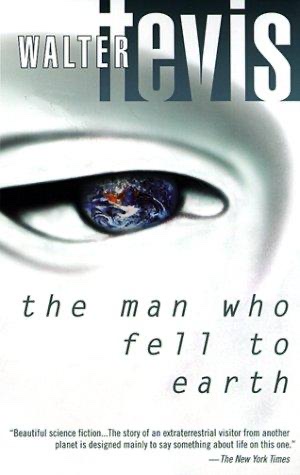
Cover of The Man Who Fell to Earth

The Man Who Fell to Earth

Walter Tevis

4 ideas

  1. Newton's Mission, Fortune, Arrest and Blinding

    Thomas Jerome Newton, a frail, light-boned alien from the war-ruined, drought-dying planet Anthea, lands in Kentucky. He turns advanced Anthean technology into a string of patents through the lawyer Oliver Farnsworth, founding the conglomerate World Enterprises to fund a ship that will carry his few hundred surviving people to Earth.

  2. Exiles Adopt the Host World's Anesthetics

    A stranger sent into a foreign society with a mission and no companions survives the isolation by taking up that society's ordinary numbing habits, here gin and television. Each dose makes the solitude bearable and the mission feel more remote, so the coping habit slowly replaces the purpose it was meant to protect. The erosion comes less from any outside enemy than from comfort and loneliness working together over years.

  3. Superior Knowledge Leaks Through Market Products

    Radically advanced knowledge can be introduced safely only by breaking it into innovations that are merely surprising, such as better photographic film or electronics, and selling them through patents and corporations. Yet each product works as evidence. An attentive expert like the chemist Nathan Bryce can work backward from the too-good artifacts to the conclusion that their source is not human, so the camouflage that builds the fortune also exposes its maker.

  4. Institutions Disable What They Cannot Classify

    When a security state meets an anomaly it cannot fit into its categories, it responds by detaining and examining it. The investigation itself does the damage, since the routine X-ray used to probe Newton destroys his sight, while his actual aim of saving his people and, as the novel suggests, steering Earth away from its own nuclear self-destruction goes unheard. Suspicion ends the one intervention that might have helped the suspicious party.

Save and mark ideas in the app