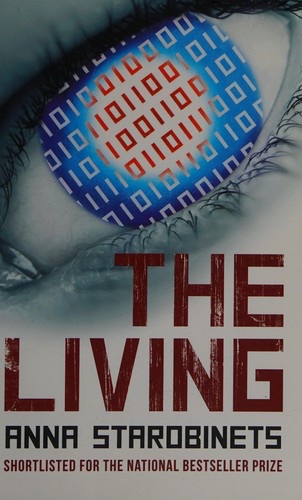
Cover of The Living

The Living

Anna Starobinets

4 ideas

  1. One extra child born outside the whole

    Humanity is fixed at exactly three billion people fused into a single networked organism, and each death is balanced by a scheduled rebirth, so every birth is a return. Then one child is born who fills no vacated slot and has no prior life, an unaccounted-for person in a system that assumed completeness. The novel follows how the collective responds to this surplus individual, testing whether a closed, self-replacing humanity can absorb or even recognize a genuinely new person.

  2. Perfect replacement abolishes genuine newness

    When every death is matched by the scheduled rebirth of the same person, the population becomes a closed loop that can only repeat itself. Such a loop has no room for novelty, because a truly new individual can appear only as an error in the count. The cost of defeating death this way is that birth stops meaning the arrival of someone who did not exist before.

  3. Humanity as a manufactured, networked organism

    Read humanity not as a sum of separate people but as one engineered organism whose members function as its cells, linked through a shared network. Seen this way, the individual born outside the network looks less like a citizen than like a foreign body, and the collective's reaction to him resembles an immune response. The lens shifts the core question from how society governs people to what a made humanity is, and what it takes to count as part of it.

  4. The surplus person as systemic anomaly

    In a system built on fixed totals, an extra member cannot be treated as another instance of the norm, because the design has no category for him. His existence exposes the system's hidden premise that its membership was complete and final. The anomaly therefore works as a diagnostic: how the whole handles its one unplanned part shows what the whole actually values.

Save and mark ideas in the app