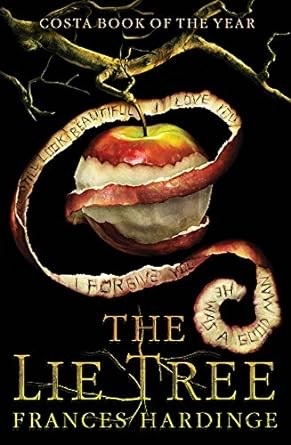
Cover of The Lie Tree

The Lie Tree

Frances Hardinge

4 ideas

  1. Faith Sunderly and her father's tree

    Fourteen-year-old Faith Sunderly follows her father, the clergyman-naturalist Erasmus Sunderly, to the island of Vane after rumours spread that his celebrated fossil discoveries were fakes. When he is found dead in an apparent suicide, she discovers he secretly kept a plant that feeds on lies. She then spreads a lie of her own, that his ghost haunts the island, to make the tree reveal who killed him. Her campaign spreads panic across the island, and she finds that the respected father she idolised built his reputation on fraud.

  2. Truth harvested by cultivating falsehood

    The Lie Tree grows only when a lie is whispered to it and then spread and believed by others. The more people believe the lie, the larger the fruit, and eating that fruit gives a vision of a hidden truth. Knowledge is bought by corrupting everyone else's shared picture of reality, so the seeker gains private truth by degrading public truth.

  3. Performed frivolity as women's hidden strategy

    Faith sees her mother, Myrtle, as vain and shallow, then learns that Myrtle's flirtation and social manoeuvring are deliberate tools for protecting her family. Victorian women were shut out of direct power, so their intelligence had to take forms that men would not recognise or resent. The girl who scorns 'feminine' tactics may be failing to recognise competence that is disguised as triviality.

  4. Science bent to certify existing prejudice

    In the novel, the scientific authority of phrenology and skull measurement is used to 'prove' that women are intellectually smaller, so prejudice is presented as neutral fact. Erasmus fakes evidence to make the fossil record agree with Scripture. Look at who benefits from a scientific conclusion, because a desire for a particular answer can corrupt both the method and the person using it.

Save and mark ideas in the app