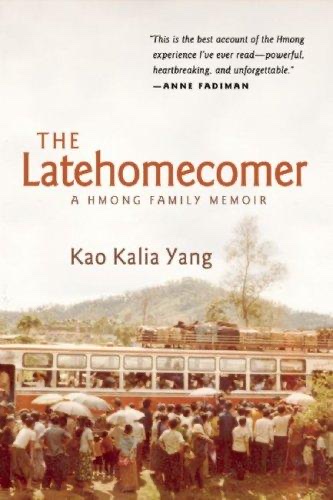
Cover of The Latehomecomer

The Latehomecomer

Kao Kalia Yang

4 ideas

  1. The Yang family's flight to Minnesota

    After the US withdrew from Laos in 1975, Hmong families who had fought in the CIA-backed army were hunted by the new communist government. Kao Kalia Yang's family hid in the jungle for years, then crossed the Mekong into Thailand. Yang was born in 1980 in the Ban Vinai refugee camp and spent her early childhood there before the family resettled in St. Paul, Minnesota, in 1987.

  2. Refugees as the residue of deniable wars

    A covert war produces no public record, so the people who fought it have no official story. When the sponsor withdraws, it keeps the benefit of the fighting and leaves the costs to the allies it recruited. Their persecution, flight and camp years then appear to the host country as an unexplained arrival rather than as a debt, so the refugees must supply the missing history themselves.

  3. The elder as a portable homeland

    When a family loses its land, the grandmother replaces it as the thing that holds them together. Her healing knowledge, her stories and her authority carry continuity across jungle, camp and city. Her death is therefore the real moment of exile, because the last link to the old place goes with her.

  4. Writing as speech for an oral people

    A people without a long written tradition can have its history erased when its elders die and the wider world never recorded the war it fought. A child who was silent and struggled in an English-speaking school can reverse this by learning to write in the new language. Written testimony in the host country's language turns private family memory into a public record the country can no longer ignore.

Save and mark ideas in the app