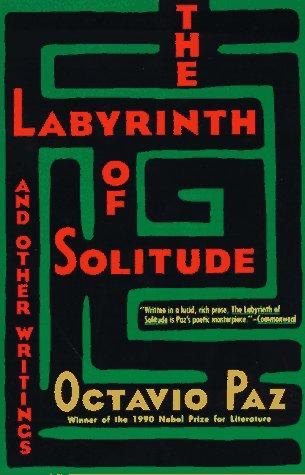
Cover of The Labyrinth of Solitude

The Labyrinth of Solitude

Octavio Paz

5 ideas

  1. The pachuco youths of Los Angeles

    Paz describes the pachucos, Mexican-American youths in 1940s Los Angeles who wore exaggerated zoot suits and belonged fully to neither Mexico nor the United States. Their outlandish dress both conformed to and parodied American fashion, deliberately provoking the hostility of the society around them. Paz reads this as a person with no inherited identity to fall back on flaunting his difference and inviting punishment, because persecution at least confirms that he exists as a separate self.

  2. The mask as defensive self-enclosure

    The Mexican man, in Paz's account, guards his inner self behind a mask of reserve, formality and stoic impassivity, treating any opening up as a humiliating vulnerability. To 'open oneself' is to be penetrated and defeated, and to 'close oneself' is to preserve dignity. The result is a character that experiences intimacy as danger and dissimulation (pretending to be what one is not, or passing unnoticed) as a survival skill learned under centuries of domination.

  3. The fiesta as sanctioned explosion of solitude

    Paz argues that the fiesta is the release valve of a closed society: for a fixed time, hierarchies collapse, money is squandered, and the normally guarded self erupts into shouting, drinking, violence and communion. The fiesta does not dissolve the solitude. It is its necessary counterpart, since people who cannot open up in daily life must periodically burst open in ritual excess and then return to the mask.

  4. La Chingada and the violated origin

    Paz treats the verb 'chingar' (to violate, to penetrate, to screw over) as a key to Mexican identity, and 'la Chingada' as the mythic violated mother, embodied in Malinche, Cortés's Indigenous interpreter and mistress. By repudiating her as a traitor, Mexicans reject their own mixed origin. The culture then divides the world into those who violate and those who are violated, the closed and aggressive versus the open and passive.

  5. History as a search for lost communion

    Paz reads Mexican history, from the Conquest through the colonial order, the liberal Reform and the Revolution, as a sequence of attempts to repair a severed relationship with the past and with a larger whole. The Reform imposed abstract liberal principles that denied Indigenous and Catholic roots, deepening the rupture. The Revolution was different: an explosive return in which Mexico briefly rediscovered itself, and so it is less a political program than a fiesta of national self-recognition.

Save and mark ideas in the app