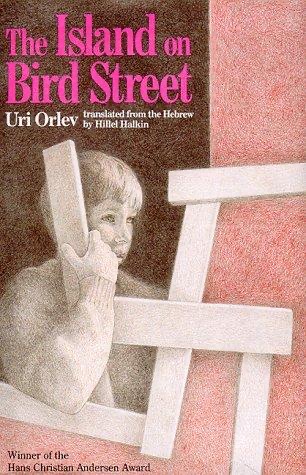
Cover of The Island on Bird Street

The Island on Bird Street

Uri Orlev

4 ideas

  1. Boy waits months in ghetto ruin

    Eleven-year-old Alex's mother has already vanished. When his father and their older friend Boruch are marched off in a deportation roundup, the father's last instruction is to hide in the ruined house at 78 Bird Street and wait, even if it takes a year, because he will come back for him. Alex lives there alone from autumn into winter with only a white mouse for company, scavenging emptied flats for food and watching both the ghetto and the Polish side of the wall, until his father returns with partisans and takes him out.

  2. Treating a hiding place as an island

    Alex reads Robinson Crusoe and reframes the ruin as a desert island to be explored, provisioned and fortified. The reframing turns an unbearable wait into a series of solvable engineering tasks: building a hideout, laying in stores, finding water and routes out. A borrowed fictional script gives a powerless child a role with agency and a daily structure, and that keeps fear and despair from taking over.

  3. Survival through observation and leaving no trace

    Alex's hideout is a high corner of a bombed floor that he reaches by a rope ladder and then pulls up behind him. In a setting where being noticed means death, safety comes from controlling who can see you and what signs you leave, not from strength. The hider becomes a watcher who learns the patterns of searchers, looters and neighbors before anyone learns his.

  4. A specific promise sustains long endurance

    The father's concrete instruction, a named place and a commitment to return even after a year, is what lets Alex hold out alone for months. General hope would erode. A precise promise from a trusted person gives a fixed point to orient around, turns waiting into keeping faith rather than simply enduring, and gives a reason to reject other offers of rescue that would mean leaving the meeting place.

Save and mark ideas in the app