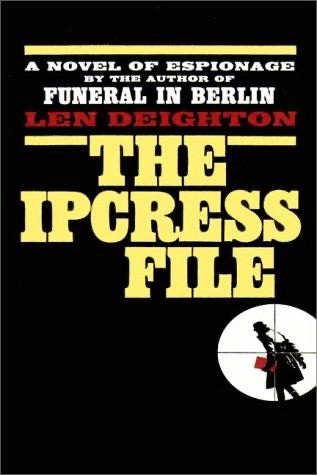
Cover of The IPCRESS File

The IPCRESS File

United Kingdom · 1950–1962

4 ideas

Buy on Amazon

In the world of Cold War British intelligence, an unnamed agent investigates the disappearance of scientists. Departmental rivalries, class tensions and arguments over expenses complicate the job. Len Deighton's spy novel makes the workings of the office part of the intrigue.

  1. Brainwashed captive discovers he never left England

    The narrator is arrested at a US atomic test on a Pacific atoll, then held in what he is led to believe is a prison in Hungary. There he is subjected to sleep deprivation, disorientation and conditioning. When he escapes, he finds he has been in London all along, and the foreign setting was staged to make him believe he was cut off from home and help.

  2. IPCRESS: conditioning through stress-induced breakdown

    IPCRESS stands for Induction of Psycho-neuroses by Conditioned Reflex under Stress. First the subject is broken down with isolation, sleeplessness, false signals about time and place, and physical strain. Then new reflexes are installed that can later be triggered by a cue. The method works because stress removes the person's frame of reference, and that frame is what normally lets someone resist suggestion.

  3. Spycraft is mostly paperwork, budgets and turf

    The agent's daily fight is less against Soviet opponents than against disputed expense claims, grudging clerks and rival departments guarding their territory. Intelligence work runs on the same small office politics as any civil service. Energy spent on internal credit and accounting often shapes an operation more than the external enemy does.

  4. Class condescension as an institutional blind spot

    The grammar-school, working-class narrator is treated as a useful but suspect subordinate by public-school superiors. The Establishment trusts people who share its manners and codes. That same trust lets a smooth, well-born superior operate as a traitor, while suspicion falls on the outsider who is actually loyal.

Save ideas and give them a thumbs up or down in the app