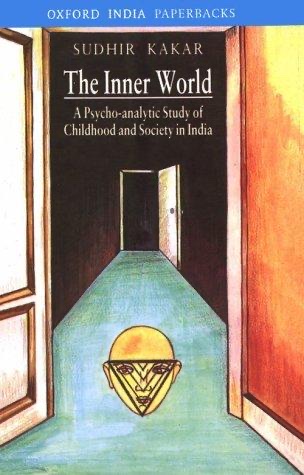
Cover of The Inner World

The Inner World

Sudhir Kakar

6 ideas

  1. Prolonged maternal symbiosis shapes Hindu selfhood

    The Indian infant, especially a son, experiences an unusually long, indulgent, and physically close bond with the mother, including late weaning and near-constant presence. This extended symbiosis delays sharp separation between self and other, producing a self whose boundaries remain relational and permeable rather than sharply individuated.

  2. The young mother's status invested in son

    A new bride enters her husband's joint family as a low-status outsider, and her position is secured only by bearing a son. Her emotional isolation and dependence make her invest intensely in her son. His childhood closeness is therefore driven partly by her need, not only his.

  3. The second birth into men's world

    Around age four or five, the boy is abruptly moved from the warm maternal world of women into the demanding, hierarchical world of men in the joint family. This sharp discontinuity is experienced as a traumatic loss. It leaves a lifelong longing for fusion with the lost maternal paradise, which later finds expression in religious yearnings for merger and release.

  4. Split image of nurturing and devouring mother

    Because the sexually unfulfilled mother turns her emotional and erotic needs toward her son, he experiences her as both all-giving and dangerously engulfing. The culture resolves this ambivalence by splitting the mother into the benevolent, self-sacrificing goddess and the terrifying, sexual, destructive one, as with Kali. Reading goddess imagery this way turns religious iconography into evidence of childhood fantasy.

  5. Hindu ego relies on external group structure

    Hindu socialization places the individual inside a web of family, caste, and dharma-defined duties rather than building a strong autonomous inner regulator. Much of the ego's work of judgment and control is outsourced to the group and its hierarchy. As a result, identity feels secure when relational embeddedness holds and anxious when it is disrupted.

  6. Myth as a culture's shared fantasy

    Myths such as those of Shiva, Parvati, Ganesha, and Krishna can be read like a patient's dreams and fantasies. In this reading they are collective representations of the recurring conflicts of childhood within a particular family structure. Analyzing which myths a culture cherishes, and how they resolve tension, reveals its dominant psychological concerns.

Save and mark ideas in the app