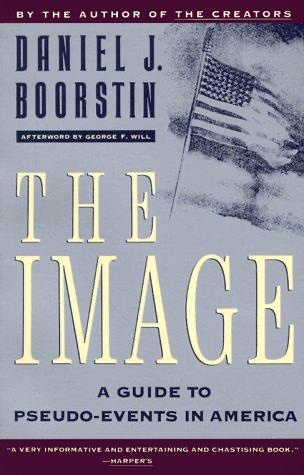
Cover of The Image

The Image

Daniel Boorstin

6 ideas

  1. The pseudo-event manufactured to be reported

    A pseudo-event is not spontaneous; it is planned, planted or incited mainly so it can be reported, as with a press conference, a staged anniversary, or an interview. Its relation to reality is deliberately ambiguous, and it tends to become a self-fulfilling prophecy: the event is organized in the hope that coverage will make it significant. Because pseudo-events are more dramatic, easier to repeat and easier to discuss than real happenings, they crowd spontaneous events out of public attention.

  2. Celebrity as person known for well-knownness

    The celebrity is a human pseudo-event: a person manufactured by publicity and known chiefly for being known, not for any achievement. The traditional hero was made famous by deeds and grew greater with time. The celebrity is made by the media, fades as the next image replaces them, and reflects back to the audience its own ordinariness magnified.

  3. Extravagant expectations drive the demand for illusion

    Americans expect more novelty, more greatness and more news than the world can naturally supply. The shortfall is filled by manufactured events and images. The public is therefore not merely a victim of deception but its willing client, paying people to create the illusions it demands.

  4. Traveler into tourist: the packaged journey

    Travel was once an active, risky undertaking in which the traveler met the unexpected. It has become tourism, a passive commodity bought as a package. The tourist visits staged attractions and insulated hotels, and checks experiences against expectations set by guidebooks and photographs. Tourists value sights for how closely they match their images, so the destination becomes a pseudo-event built for visitors.

  5. Images replacing ideals as guides to action

    An ideal is something we strive toward and judge ourselves against. An image is a synthetic, believable, passive and simplified profile that is designed for an effect and that we try to fit ourselves into. Seeing corporate, national and personal identity as managed images shows how questions of 'what is true or good' become questions of 'what is believable and projects well.'

  6. Credibility replaces truth in the graphic revolution

    New technologies for reproducing and distributing images and words mass-produce vivid representations, which the book calls the 'graphic revolution.' The copy then becomes more compelling and more familiar than the original. Advertising works in this space: it is neither true nor false but credible, and it succeeds by making statements people want to believe. Belief itself then helps create the reality it describes.

Save and mark ideas in the app