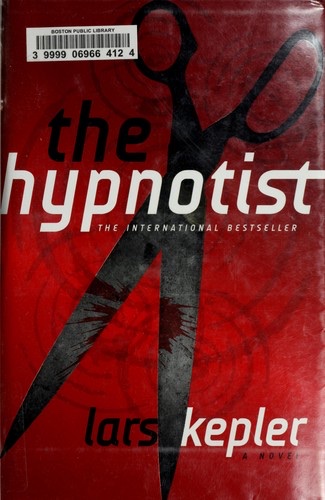
Cover of The Hypnotist

The Hypnotist

Lars Kepler (Alexandra and Alexander Ahndoril)

4 ideas

  1. Hypnotising the sole survivor exposes the killer

    In Tumba, outside Stockholm, a father is found killed at a sports ground and his wife and young daughter are butchered at home. Their fifteen-year-old son Josef survives with hundreds of knife wounds. Detective Inspector Joona Linna persuades Erik Maria Bark, a hypnotist who had sworn off the practice after a professional scandal, to hypnotise the boy to identify the attacker, and under hypnosis Josef's account points to himself as the murderer.

  2. The surviving victim as hidden perpetrator

    Investigators extend protective sympathy to the most grievously wounded survivor, and that sympathy exempts him from suspicion. The injuries themselves serve as an alibi. A survivor's wounds show that he was involved in the violence, but not which side he was on, so treating injury as proof of innocence lets the true offender sit inside the protective circle.

  3. Therapeutic intervention creates dormant, targetable grievances

    A therapist who works with patients' deepest material, as Bark did with his hypnosis group, builds up a store of intimate knowledge and unresolved resentment in the people he treated. Years after he abandons the practice, a former patient who blames him for a personal loss abducts his son. The claim is that the power to open someone's mind leaves a liability that outlasts the treatment and can be turned against the practitioner's own family.

  4. Medical dependency as a countdown clock

    Bark's son Benjamin has a bleeding disorder and needs regular clotting-factor injections. Once he is taken, the kidnapping becomes a race against his body failing, not just against the kidnapper's intentions. Seeing a crisis through the victim's physiological deadline turns open-ended dread into a fixed, shrinking window, and it forces the searchers to accept imperfect information and make risky moves.

Save and mark ideas in the app