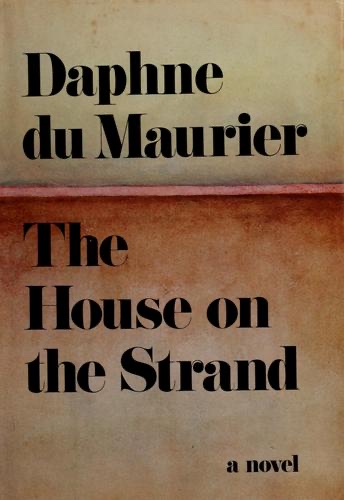
Cover of The House on the Strand

The House on the Strand

Daphne du Maurier

4 ideas

  1. Dick Young's drug-induced journeys to Kilmarth

    Dick Young stays at Kilmarth, a Cornish house lent by his friend Magnus Lane, a biophysicist who persuades him to test an experimental drug. Each dose sends Dick's mind into the 14th century, where he follows the steward Roger Kylmerth and grows infatuated with the noblewoman Isolda Carminowe, while he lies to his wife Vita and hides the drug's side effects. Magnus is killed by a train while apparently walking in a trance, and Dick keeps taking the drug until a final dose leaves him with sudden numbness in his hand, a sign of lasting physical damage.

  2. The powerless observer's intensified attachment

    Dick can watch the past but cannot speak to, touch, or change it, and any attempt to touch someone snaps him back to the present. His inability to intervene makes him more obsessed rather than less, because he can only witness what happens to people he cares about. Watching without any power to act becomes its own kind of bond.

  3. Absorbing fantasy turns real life into interruption

    Once an escape offers a more vivid world than daily life, the present starts to feel like an obstacle between visits. Relationships, obligations and even bodily safety are treated as intrusions to be managed. The addiction is to the other world rather than the drug's physical effect, while the body stays in the present and suffers the consequences.

  4. Landscape as a layered historical palimpsest

    The same stretch of ground holds several eras at once: fields, roads and a railway line now cover what were once tidal inlets, manor houses and ferry crossings. Reading a place this way means seeing present-day features as the surface over older routes and buried lives. It also shows the physical danger of moving through today's terrain according to a map of the past.

Save and mark ideas in the app