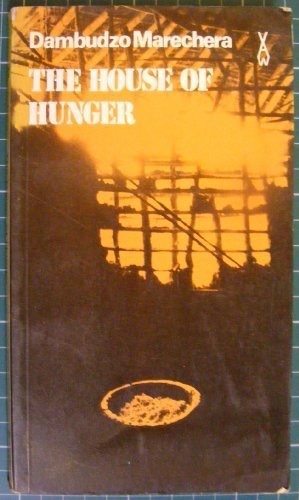
Cover of The House of Hunger

The House of Hunger

Dambudzo Marechera

4 ideas

  1. Leaving the township house at dawn

    The title novella opens with the unnamed narrator walking out of his family's house in a Rhodesian township ('I got my things and left') and drifting into a beerhall, where drinking with an old acquaintance, Harry, sets off a disordered flood of memories. The memories include a mother and father locked in mutual cruelty, a brother, Peter, who beats the woman he lives with, school beatings, the narrator's student political activity, and his lover Immaculate. Nothing resolves: the 'leaving' never becomes an escape, because each memory shows the house's hunger already installed inside him.

  2. Hunger as a total inherited condition

    The 'house of hunger' names a home in which deprivation is material, emotional, sexual and intellectual at once, so that the lack of one feeds the others. Humiliation under colonial rule is passed downward: men degraded by the system brutalise wives, wives turn on children, and children absorb violence as the grammar of intimacy. Because the oppressed prey on one another, the story refuses the uplifting narrative of a united, innocent victim community.

  3. Fractured form as the symptom itself

    The prose does not describe a breakdown from a stable vantage point. It breaks down on the page, with abrupt time-jumps, hallucinations, grotesque imagery and unsignalled shifts between memory and present. The lens holds that a colonised, traumatised consciousness cannot be truthfully rendered in orderly realist narration, because coherent form would falsify the experience by implying a wholeness the subject does not have. Reading the style as evidence rather than ornament changes what the book is saying.

  4. Colonial education splits the educated subject

    The narrator's hunger for English literature and ideas is a real appetite, but it strands him between worlds. His learning alienates him from the township and its language, while it earns him no admission to white society, which still sees him as a native. The educated colonised person therefore carries two contempts at once, the colonisers' contempt for him and his own trained contempt for his origins. Much of his mental disintegration comes from living inside both.

Save and mark ideas in the app