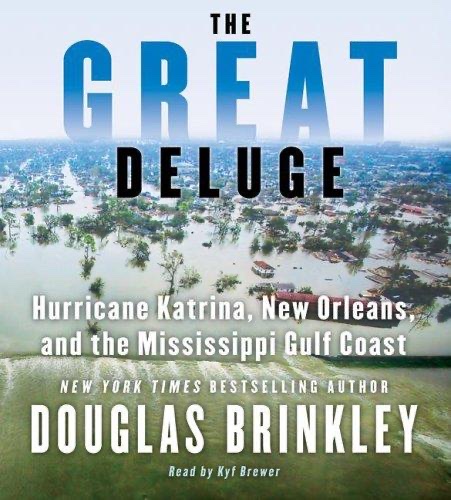
Cover of The Great Deluge

The Great Deluge

Douglas Brinkley

4 ideas

  1. Nagin's late order and drowned buses

    Mayor Ray Nagin did not order New Orleans' first-ever mandatory evacuation until Sunday morning, August 28, 2005, roughly a day before Katrina's landfall. The city's own school and transit buses, which the emergency plan had allotted to carless residents, sat unused and were photographed submerged in flooded lots. Tens of thousands were instead sent to the Superdome, declared a 'refuge of last resort' without adequate food, water, sanitation, or security.

  2. The flood was engineered, not natural

    New Orleans drowned because federally built floodwalls on the 17th Street and London Avenue canals and the Industrial Canal failed, some at water levels below what they were designed to hold. The hurricane was the trigger, but the catastrophe was a failure of Army Corps of Engineers design and maintenance. Calling it a 'natural disaster' shifts blame from institutions onto weather.

  3. Improvised local rescuers outperformed command hierarchies

    Meanwhile FEMA and the city's command structure stalled on authorization, coordination, and turf. Rescue capacity came from local knowledge, owned equipment, and permission to improvise, not from position in the chain of command.

  4. Evacuation plans assume car ownership

    An evacuation built on 'get in your car and leave' quietly abandons everyone without a car, money for a motel, or somewhere to go. In New Orleans that meant roughly a hundred thousand mostly poor and Black residents, along with the elderly and sick. Read through this lens, the disaster did not create inequality; it sorted people by existing inequality into those who escaped and those left in the water.

Save and mark ideas in the app