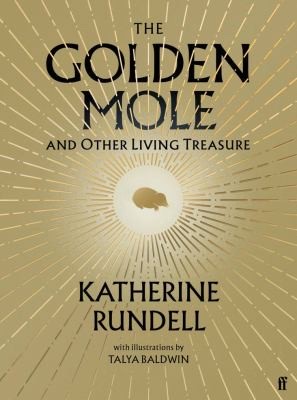
Cover of The Golden Mole

The Golden Mole

Katherine Rundell

5 ideas

  1. De Winton's golden mole rediscovered after decades

    De Winton's golden mole is a blind, iridescent-furred mammal that 'swims' through the sand dunes of South Africa's Northern Cape. Scientists had not recorded it since the 1930s and feared it extinct.

  2. Wonder is a precondition for protection

    People do not fight to save what they cannot picture or have never been astonished by. Detailed, delighted knowledge of an animal's strangeness is therefore not a luxury alongside conservation but the thing that produces the will to conserve. Cultivating wonder is a practical and political act rather than a sentimental one.

  3. Human myths decide an animal's fate

    An animal's survival often depends less on its biology than on the stories humans attach to it. The pangolin's scales are keratin, the same material as fingernails, yet belief in their medicinal power has made it among the most trafficked mammals. Reading an animal's cultural history shows where the pressure on it actually comes from.

  4. Animal strangeness exposes the limits of human imagination

    The swift can stay airborne for months, eating and sleeping on the wing. The narwhal's tusk functions as a sensory organ. Such real facts routinely exceed what fiction would have dared to invent. Recognizing this shows that our default picture of what life can be is narrowly human-shaped.

  5. Close attention to one creature at a time

    Talk of biodiversity loss as aggregate numbers numbs readers. Rundell treats each species as a single, specific portrait: its body, its habits, and its entanglement with human history. Particularity makes loss legible, because a reader can grieve a wombat or a pangolin in a way they cannot grieve a statistic.

Save and mark ideas in the app