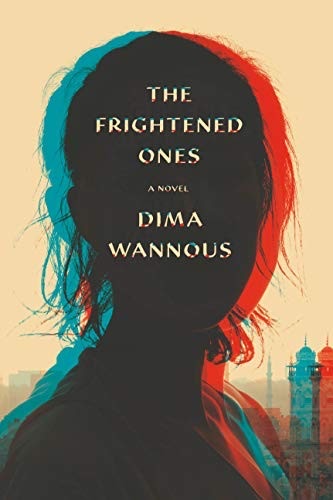
Cover of The Frightened Ones

The Frightened Ones

Dima Wannous

4 ideas

  1. Reading one's life in a vanished lover's manuscript

    Suleima, a young woman in Damascus, meets Naseem, a doctor and writer, in the waiting room of her psychiatrist, Kamil, and they become lovers. After Naseem disappears as the war engulfs Syria, he leaves her his unfinished novel about an unnamed frightened woman whose history closely mirrors her own. Reading it, Suleima cannot tell whether he wrote her, another patient, or a composite, and her narration alternates with the manuscript's.

  2. Political fear becomes privatized as psychiatric illness

    Under a police state, terror produced by the regime shows up as individual symptoms: panic attacks, insomnia, dependence on sedatives. Treating the patient manages the symptom while leaving the regime that produces it intact.

  3. Inherited fear outliving its original cause

    Fear learned in one generation under repression, such as the massacres and disappearances of the 1980s, passes to children as habits of silence, self-censorship, and hypervigilance, even when they never witnessed the original violence. This inherited fear keeps running as a reflex after the specific threat is gone. So when the 2011 uprising and war arrive, people meet them already primed, and the new violence lands on a population conditioned in advance to freeze and hide.

  4. The self as a text authored by others

    When a person lives under constant surveillance and suspicion, their identity comes to feel written by outside observers rather than by themselves. Suleima's discovery that her inner life already exists in someone else's manuscript dramatizes this: being known without consent is both intimate and violating. Because the manuscript is unfinished, authorship of her own story stays unresolved, as open as the unresolved fate of the missing.

Save and mark ideas in the app