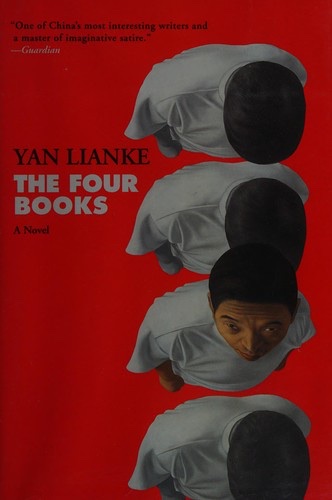
Cover of The Four Books

The Four Books

Yan Lianke

3 ideas

  1. Paper safflowers traded for freedom

    In the Ninety-Ninth District re-education camp on the Yellow River, a youthful overseer called the Child governs a camp of intellectuals, including the Author, the Scholar, the Musician and the Theologian, by handing out small paper flowers. Enough flowers earn a star, and enough stars earn permission to return home to Beijing. The prisoners then compete for these tokens by inflating grain and steel output and by informing on one another.

  2. The informant as the only witness

    The Author keeps two records at once. One is an official dossier of his fellow inmates' crimes, written to earn his release. The other is a secret novel that preserves what actually happened. The mechanism is that the regime needs documentation, so the person it enlists to betray others is also the person positioned to produce the surviving testimony. Complicity and witness come from the same act of writing.

  3. Wheat fed with the Author's blood

    To produce a record harvest that will win his release, the Author waters a plot of wheat with blood drawn from his own body. The wheat grows ears grotesquely larger than any natural crop. The image literalizes how the Leap's impossible yield quotas were met on paper by consuming the bodies of the people who produced them, while famine spread around the showpiece.

Save and mark ideas in the app