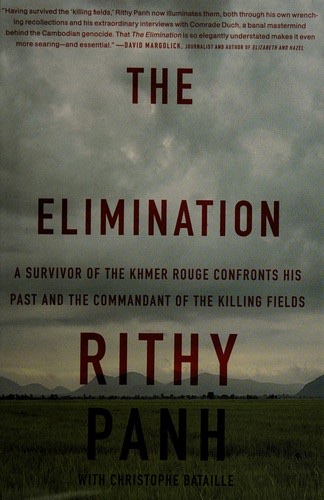
Cover of The Elimination

The Elimination

Rithy Panh

4 ideas

  1. A survivor films the S-21 commandant

    Rithy Panh was thirteen when the Khmer Rouge emptied Phnom Penh in 1975; over the next four years his father refused to eat and died, and his mother, siblings and other relatives died of starvation, disease and exhaustion in the labor camps. Decades later, as a filmmaker, he spent months filming conversations with Kaing Guek Eav (Duch), commandant of the S-21 prison where around 12,000 or more prisoners were tortured and nearly all were executed. Duch alternately laughed, recited party slogans, and claimed he only followed orders, while Panh answered with documents and his own memories.

  2. Perpetrator evasion works through bureaucratic self-description

    Duch presents himself as a teacher, a meticulous administrator, and a cog who carried out orders. By talking about procedures, documents and chains of command, he removes the act of killing from his account while still admitting the facts, so his confession comes out as a description of an office rather than a crime. The survivor's task is to put the bodies back into that language by insisting on concrete acts, names and consequences.

  3. Totalitarian language as an instrument of elimination

    The Khmer Rouge used slogans such as 'to keep you is no gain, to lose you is no loss' and categories like 'new people' and 'enemies.' These phrases declared people disposable before anyone killed them, which made the killing seem administrative and inevitable. Reading how a regime reshapes words shows how it prepares mass murder and trains its agents not to see victims.

  4. Understanding a perpetrator is not forgiving him

    Panh refuses both forgiveness and the demand for a single ritual confession. He argues that the survivor's duty is to take apart the perpetrator's logic until its mechanics are visible, because the victims are owed an accurate record rather than reconciliation. Memory kept in images, archives and testimony is a counterweight to a regime whose aim was to erase people without a trace.

Save and mark ideas in the app