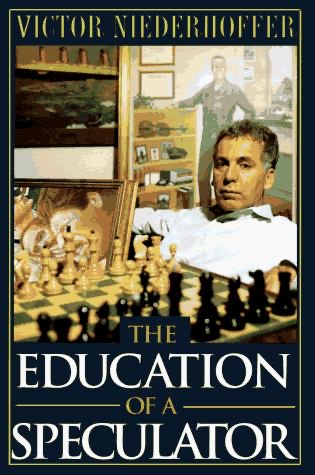
Cover of The Education of a Speculator

The Education of a Speculator

Victor Niederhoffer

4 ideas

  1. Ever-changing cycles destroy discovered regularities

    Market patterns do not stay fixed. Once a regularity becomes known and profitable, traders exploit it, and it fades or reverses. A speculator must expect today's working edge to stop working and must keep re-testing rather than trusting any rule permanently.

  2. Count and test before believing

    Every market saying, tip or intuitive pattern should be turned into a testable hypothesis and checked against historical data. Only then should money be risked on it. Most folk wisdom fails that test, and the discipline of counting protects the trader from vivid anecdotes and from his own storytelling.

  3. Markets as predator-prey ecosystems

    The market works like an ecology in which professionals, brokers and market makers live off the steady losses and transaction costs of the uninformed public. The Coney Island hustlers and racetrack touts Niederhoffer saw through his policeman father work the same way. Asking 'who is feeding on whom here?' shows why the naive player loses even when the game looks fair.

  4. Game mastery transfers to speculation

    The skills that won Niederhoffer squash championships also apply to trading: relentless practice, studying an opponent's tendencies, and exploiting predictable weaknesses. He also argues that competitive games and gambling teach odds and emotional control better than formal finance.

Save and mark ideas in the app