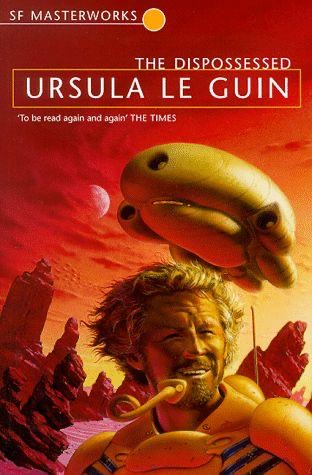
Cover of The Dispossessed

The Dispossessed

Ursula K. Le Guin

4 ideas

  1. Shevek's physics blocked without any law

    On anarchist Anarres, the physicist Shevek finds his work on a unified theory of time suppressed by his senior colleague Sabul. Shut out at home, Shevek travels to capitalist Urras to finish the theory. There he learns that both governments want it for leverage, so he broadcasts it freely to every world at once.

  2. Informal power regrows where formal power is abolished

    Removing laws, property, and government does not remove domination. It shifts domination into public opinion, custom, and control of whatever channels still distribute resources. Because this power is unofficial, it cannot be named or appealed against, so it can bind people more tightly than a written rule.

  3. Permanent revolution against one's own institutions

    A free society stays free only if its members keep breaking the habits and hierarchies that harden inside it, including those formed by the revolutionaries themselves. A revolution treated as finished becomes a new orthodoxy. Freedom is therefore an ongoing practice of dissent, not a condition that was achieved once at the founding.

  4. Scarcity versus abundance reveals what ownership does

    Put a person used to shared scarcity inside abundance built on ownership and inequality. Things the owning society treats as natural then stand out as choices: hoarding, display, servants kept out of sight, and people valued by what they possess. The same move works in reverse, exposing how shared poverty can press people toward conformity and duty until little room is left for the individual.

Save and mark ideas in the app