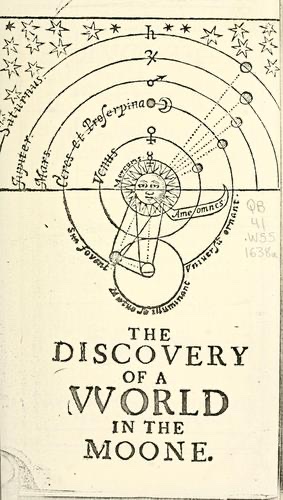
Cover of The Discovery of a World in the Moone

The Discovery of a World in the Moone

John Wilkins

5 ideas

  1. Strangeness Is No Ground for Rejection

    An opinion should not be dismissed because it sounds absurd or new, since many beliefs now accepted were once ridiculed. The existence of the antipodes was denied by learned authorities, even Church Fathers, and was later confirmed by voyages. Sounding impossible is a fact about the listener's habits, not evidence about the world.

  2. Scripture Speaks to Common Apprehension

    Scripture describes nature as it appears to ordinary people because its purpose is moral and religious instruction, not natural philosophy. A verse calling the moon a 'great light' reports how it looks to the eye, and should not be read as a physical claim that it shines by its own light. On this reading, a text's intended function limits which kinds of claims can fairly be drawn from it.

  3. The Heavens Are Not Incorruptible

    The Aristotelian division between a changeable earth and perfect, unchangeable heavens fails against observation. New stars, sunspots and the moon's rough surface show that celestial bodies are made of ordinary, alterable matter. If there is one physics for everything, the moon can be a place like the earth rather than a crystalline ideal.

  4. Earthshine: Earth as the Moon's Moon

    The faint glow on the dark part of a crescent moon is sunlight reflected off the earth onto the moon. It shows that the earth shines for a lunar observer just as the moon shines for us. The phenomenon turns the earth from the fixed center into one reflecting body among others, and makes the symmetry between the two worlds visible.

  5. Inferring Lunar Geography by Analogy

    Telescopic features are read by matching them to known terrestrial causes. The moon's jagged terminator and bright points appearing before the rest is lit indicate mountains catching sunlight. Darker smooth regions suggest seas, and haze suggests an atmosphere. Each visible effect is tied to the earthly cause that would produce it, which lets the moon be described as a world without anyone visiting it.

Save and mark ideas in the app